
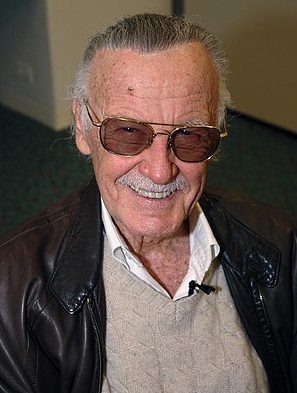
Stan Lee
I came across these two profiles/interviews featuring Marvel Comics and Spiderman creator Stan Lee, and Jason Fried of 37signals in the November 2009 issue of Inc. magazine.
Stan Lee is still going strong at the age of 87, and his story is told in the feature, How I Did It.
My favorite part is here:
“After about 20 years on the job, I said to my wife, “I don’t think I’m getting anywhere. I think I’d like to quit.” She gave me the best piece of advice in the world. She said, “Why not write one book the way you’d like to, instead of the way Martin wants you to? Get it out of your system. The worst thing that will happen is he’ll fire you — but you want to quit anyway.” At the time, DC Comics had a book called The Justice League, about a group of superheroes, that was selling very well. So in 1961 we did The Fantastic Four. I tried to make the characters different in the sense that they had real emotions and problems. And it caught on. After that, Martin asked me to come up with some other superheroes. That’s when I did the X-Men and The Hulk. And we stopped being a company that imitated.”
The full story can be found here.
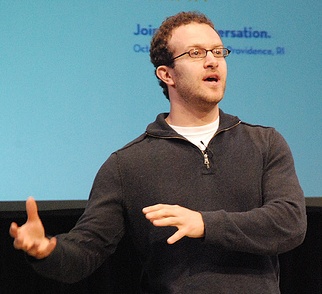
Jason Fried of 37signals
Also in the same issue, Jason Fried, CEO of 37signals provides insight into his workday and how he operates his company.
Some interesting quotes:
“Employees come to the office if and when they feel like it, or else they work from home. I don’t believe in the 40-hour workweek, so we cut all that BS about being somewhere for a certain number of hours. I have no idea how many hours my employees work — I just know they get the work done.
It really bothers me that the definition of success has changed from profits to followers, friends, and feed count. This crap doesn’t mean anything. Kids are coming out of school thinking, I want to start the next YouTube or Facebook. If a restaurant served more food than everybody else but lost money on every diner, would it be successful? No. But on the Internet, for some reason, if you have more users than everyone else, you’re successful. No, you’re not.”
You can read the full story here.

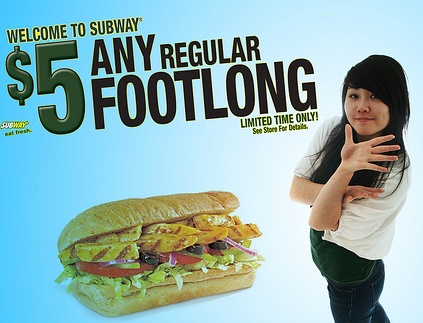
When you are a franchisee owner you have the good: customers know your name and product; but you also have some challenges: you have to follow the corporate/franchise manual to the letter of the law so you do not have much room to change things/improvise for fear of losing those customers. The November 5, 2009 Businessweek has a story “The Accidental Hero” about Stuart Frankel, a franchisee of two Miami based Subway sandwich shops. After noticing sales sagging he came with the idea of selling the footlong sandwich for $5.
From the article:
“Stuart Frankel’s $5 footlong idea illustrates how a huge company can wake up and eventually seize on a good idea that’s not generated at headquarters. Frankel, along with two other local managers in economically ravaged South Florida, ceaselessly championed the idea to Subway’s corporate leadership amid widespread skepticism. Once it was approved, Subway’s marketing team quickly generated a memorable campaign that firmly established the $5 footlong nationwide. For Frankel, the biggest surprise from his $5 promotion was that his profit margins didn’t decline. Many promotions are so-called loss leaders designed to draw customers in the hope they’ll buy higher-margin items alongside the featured special. Even after adding two new staffers, Frankel made money on each $5 sandwich.In September 2007, Steve Sager, a Subway development agent who oversaw about 225 franchises across South Florida, heard about the success of Frankel’s $5 deal. He decided to try it in a troubled Fort Lauderdale outlet on Commercial Boulevard, a gritty thoroughfare dotted with strip malls. On the first day of the promotion, the store nearly ran out of bread and meat. Sales doubled.
Sager called Subway co-founder Fred DeLuca, who lives in the vicinity, and excitedly shared the news. An intrigued DeLuca came by the shop and, Sager says, “saw the potential instantly.” Clearly, the South Florida crew was onto something. The question was whether it would resonate elsewhere. “Unless it was in your store, you were skeptical,” Moody says. At a meeting of the franchisee marketing board that fall, Frankel presented his idea. Many owners thought the promotion would send food and labor costs soaring, erasing any hope of profits. A motion to roll it out nationally failed.
But others picked up on Frankel’s idea and tried it in locations ranging from Washington to Chicago. Right before Christmas 2008, the board voted again, and the motion passed. (Franchisees still had the option to not do it.) Moody pushed ahead with a national campaign, despite having no market research to back up the idea. “It violated all our normal processes,” says Moody, whose annual ad budget is around $500 million. Soon, copycat offers emerged. Boston Market offered 11 meals for $5 each, while Domino’s sold sandwiches for $4.99 and KFC launched $5 combo meals. T.G.I. Friday’s began selling $5 sandwiches. “
What do I like about this story? The ability of a great idea starting far down the chain, and then successfully getting the attention of the top brass that has the sense to implement it across the board. And you know you are on to something when your competition starts copying your strategy as well.
Click here for video of the story.

In the November 4, 2009 issue of BusinessWeek, the article, “Ask Your Doctor If This Ad is Right for You,” points out that the pharmaceutical industry is spending up to $5 billion a year on advertisements with the hope that consumers viewing and listening to the ads will then go to their doctor and request that product to treat their ailment.
As the article states:
“Does it seem like you hear the phrase “ask your doctor” every time you turn on the TV? There’s a reason. Drug companies spend about $5 billion a year in the U.S. on ads imploring people to talk to their physicians if they think a pill they’ve read about or seen on TV might help them. Such ads are so pervasive one might assume viewers are heading to the doctor knowing which drugs they want. “
The problem is that these advertisements are actually scaring the patients as they are now asking their doctors if all these harmful side effects actually do occur:
“But new research based on recordings of conversations in physicians’ offices suggests most patients aren’t asking for drugs by name. Or they’re only asking about scary side effects, which drugmakers have to include in ads, often in stomach-turning detail. Market researcher Verilogue recorded 12,500 patient-doctor conversations in 2008 and found only 23 requests for specific drugs. For example, researchers found that the fifth most heavily advertised drug, sanofi-aventis’ insomnia remedy Ambien, was often remembered for side effects like hallucinations, sleep-eating, and other problems. “I think it’s, uh, Ambien that says you might go out to eat and not remember,” said one patient in the study. The campaign cost sanofi $151 million last year, and Ambien sales actually fell by 37%, to $806 million.”
Click here for the full article.

Twitter is Pets.com until it makes money – Peter Shankman
On November 3 Sandra Fathi gave a presentation to the New York Chapter of The Public Relations Society called, “Advance Twitter” offering more tips/advice from her previous October presentation. Peter Shankman provided the second half of the presentation providing insight on his use of Twitter and social media in general.
Sandra provided the following points:
– Is your audience on Twitter?
– All PR folks need to understand web analytics
– Your organization needs to have a social media usage policy for employees spelling out what they can and cannot do. Where can you start? The Word of Mouth Marketing Association has guidelines for social media usage policy.
– How do I keep track of my competitors? Just subscribe to all your competitors on Twitter or sign up for Twitter alerts that are sent to your email via TweetBeep.
– Twitter Fan Wiki is a great guide to Twitter
Peter made the following points:
– Be interesting and don’t be stupid
– Twitter is pets.com until it makes money
– We have embraced text messages and short twelve second videos
– Embrace the concept not the brand
– If the client is not tweeting or blogging themselves, they do not get it
– You have to teach your client to tweet as they have to be doing it themselves
– When you tweet it is invasive so be interesting and worth the attention.
– The art of Twitter is the re-tweet where valuable information gets passed on. This will grow your personal brand.
– Worse thing to do with Twitter is to be tweeting on a consistent basis, and then just stop (Delta Airlines last tweet was June.) Peter tweeted to Delta about being stuck in an airport and four hours later NorthWest responded offering him a seat on one of their flights. He is still waiting for Delta to respond.

This may be your next ride in Mumbai if things remain the same.
An article from the October 28, 2009 Wall Street Journal “On Mumbai’s Streets, Cabbies Fight to Keep Passengers Uncomfortable,” illustrates just how difficult it is for some people to change. In this case the cab drivers of Mumbai have chosen to continue driving Fiat cabs that are no longer in production. And with that old technology, the customers have to endure a very uncomfortable ride.
From the article:
“With more than 50,000 taxis, the city formerly known as Bombay has one of the biggest cab fleets in the world, as well as one of the most antiquated. Most of the taxis are Premier Padminis, the Indian version of the Fiat SpA’s 1100 model that the Italian car maker stopped producing in 1966. Even Premier Ltd., the Indian company that had the right to build them here, stopped manufacturing them in 2000. Drivers keep them running with scrap parts and use metal patches to cover the rust holes. ”
There is a growing number of Mumbai cabbies that have purchased new taxis which also features a modern taxi meter. The biggest advantage of the new cabs is air conditioning which makes an enjoyable ride for the passenger.
The article continues:
“But many of Mumbai’s 200,000 or so taxi drivers are having none of it. And they are resisting those who would offer a nicer ride in shinier new cars — with strikes, court cases and violence. Sheikh Shamin Ahmed, 43 years old, was eating chicken fried rice at a roadside stand next to his new, metallic-green cab when two old taxis full of old-taxi drivers rolled up and started to beat him. They told him his fancy new Mahindra Renault with its air conditioning and GPS navigation system had better stay away from their customers.”
So if you want to take a cab in Mumbai be prepared to deal with this:
“Despite Mumbai’s muggy 90-degree weather, they don’t have air conditioning and their old suspensions mean passengers feel every one of the city’s many potholes. When it comes time to pay, the bill riders have to depend on a mechanical meter box on the hood of the car, which shows the fare as it would have been in 1973.”
Change may come to Mumbai; the cabbies will have to wait for the time being.
Click here to view video and read the full story.
 The Mike Johnson Blog