

The January 9, 2010 New York Times has an article, “Is ‘Sorry’ the Hardest Word in Health Care?” points out that hospitals and drug makers used to make public apologies when things went wrong such as an incorrect medical procedure or a fatal dose of medicine. But over the past few years there has been an absence of any admission of wrongdoing.
But the bigger issue may be in the choice of words used after an error has been made.
From the article:
“Does working for a hospital or a drug maker mean never having to say you’re sorry? Even a decade ago, according to physicians, it was standard practice for many doctors and hospitals not to inform patients about medical errors. Now an increasing number of leading medical centers are taking a different tack and encouraging doctors to apologize to patients for mistakes and to explain what went wrong. Doctors say that such accountability can help patients feel more cared for and empowered, as well as enhance the reputation of the doctor and medical center as honest brokers.”
Or maybe it can all be blamed on the lawyers:
“Apologizing isn’t popular among drug makers, however. And in our litigious country, C.E.O.’s are understandably gun-shy about teeing up a costly lawsuit by issuing an apology that a court might later construe as an admission of guilt. So even though two leading drug makers last year paid massive fines to settle charges that they had illegally marketed certain drugs for unapproved uses, they did not use the word “apologize” in their public statements.”
Here is how two companies provided their statements:
“Eli Lilly pleaded guilty to a misdemeanor and paid $1.41 billion to settle criminal and civil charges that it improperly marketed an antipsychotic drug for elderly patients with dementia, potentially putting them at risk. After its settlement, Lilly issued a press release saying, “We deeply regret the past actions covered by the misdemeanor plea.” (In response to a reporter’s query, Marni Lemons, a spokeswoman for Lilly, said, “We think that is an apology.”)
Pfizer paid $2.3 billion to settle criminal and civil charges that it had illegally marketed an anti-inflammatory drug and other products. Similarly, Pfizer’s statement said, “We regret certain actions taken in the past.” (Christopher Loder, a Pfizer spokesman, said last week, “We have publicly acknowledged our conduct and taken full responsibility.”)
The word “regret” just does not cut it as stated here:
“A company that openly apologizes does more than merely take public responsibility for its actions — it also signals to its own employees that certain practices are unacceptable, analysts say. And, they add, a company expressing regret may not be accepting blame. After all, you can regret an event, like an earthquake or a hurricane, in which you played no role. “Companies use ‘regret’ as a way of avoiding accountability,” said Dr. Carl Elliott, a professor at the Center for Bioethics at the University of Minnesota. “You regret something that happened, not something that you did.”
But it all comes down to the apology may be a good thing for not only the company, but the employees of the company as now they have a role model:
“Openly apologizing also has the potential to turn a problem into a teachable moment for employees, thereby preventing a repeat occurrence, says Paul Levy, the chief executive of Beth Israel Deaconess Medical Center in Boston. In 2008, a surgeon at his hospital mistakenly operated on the wrong side of a patient. The doctor and other hospital personnel apologized. The medical profession, he says, was initially hesitant to embrace contrition. But, he says, “as in any field, once you have a few leaders do it and the world doesn’t end and, in fact, is made better, then people tend to follow.”
Read the New York Times January 10, 2010 article “Is ‘Sorry’ the Hardest Word in Health Care?”

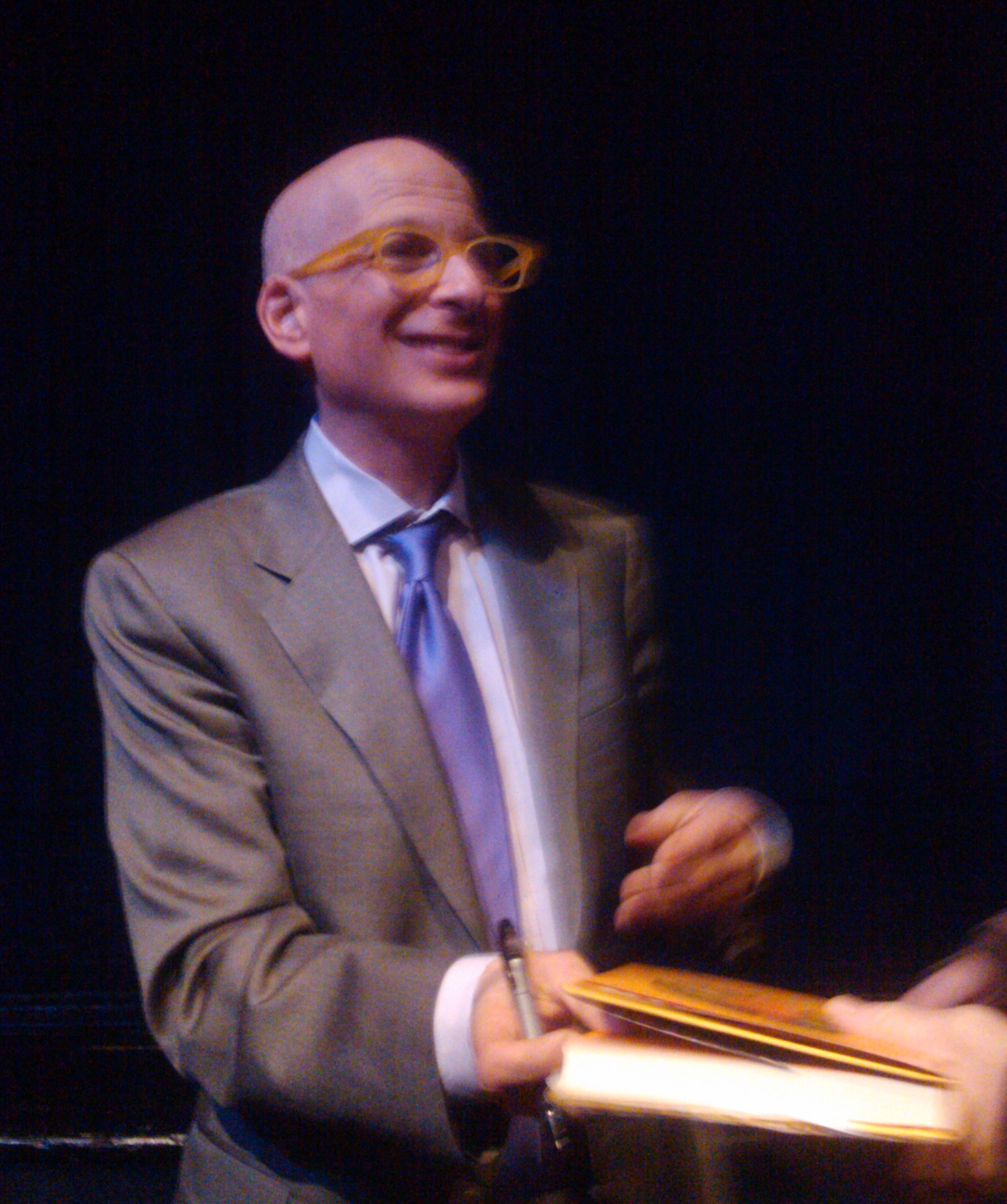
Seth Godin signing copies of his new book, Linchpin.
Seth Godin has just released a new book, Linchpin, and gave a presentation at the Fashion Institute of Technology in New York that also included a question and answer session in the afternoon. Some of his other books include: Purple Cow, Permission Marketing, and Meatball Sundae. Seth provides unique marketing strategies and a great blog. I attended the presentation and my notes are below:
– When I wake up in the morning I don’t ask – “I wonder what book I should write today?”
– I was getting letters from people that said, ” This is not right. My life is not right. I went to the right schools, lost my job, and have not been able to make the right change in the world.” This led me to thinking on how we got here.
– I looked at various books such as: Life Inc. by Doug Rushkoff where he points out that money really changed everything, and The Gift by Louis Hyde.
– There is also a book by Steve Pressfield The War of Art on how hard it is to write a book, screenplay, etc.
– We all have a lizard brain that has a voice called the resistance which brainwashes you into believing something that is not true (fear of sharks, fear of snakes, fear of public speaking, etc.)
– Are you a genius? A genius brings new thinking to an old problem and solves it.
– The factory model takes resources, people, systems, and generates a product/profits at the other end.
– Henry Ford created the factory system. The Ford System took a man and gave him machinery and a process to follow, and paid him $5 a day to work. The deal was: the faster the assembly line goes, you make more money.
– Interchangeable people are very efficient – you act up, I will fire you.
– You can order from a drive thru at McDonalds where the orders are taken from people at a call center in another state rather than the McDonalds employees at the location you are ordering.
– Industrialists wanted to train the public to work in a factory and to buy things.
– Weapons of Mass Instruction by John Taylor Gatto states that school is a total scam since Carnegie and others thought establishing a public education system would train people to buy things.
– Art is the act of a human being who is working without a manual and is able to connect with another human being to make something happen.
– Painting is different. Plenty of people who put paint on canvas, but are not artists.
– You don’t want to engage in any activity where the best you can do is already known.
– Factory has workers and owners, but now with a computer you become the owner and worker.
– Means of production owned by the workers. But now with the internet, we are sharing the work together without permission, without an expensive system, without an office park.
– Bob Marley did not fit the model of what the record companies wanted.
– Jimmy Wales founded Wikipedia. Tens of thousands of people working for free contributing to Wikipedia eventually put Encyclopedia Britannica out of business.
– Mechanical Turk was a machine that acted like a person. Jeff Bezos of Amazon.com built a system where lots of people did little jobs. Lots of people doing work for very small amounts such as transcribe five minutes of audio for 10 cents. Then other parts are done by other people, and then all the little jobs are pulled together and completed as a whole.
– What are our kids spending time in school doing? We teach them to fit in, be compliant.
– All the things we got graded on in school we do not do at work in our current job.
– Just because the tide is out does not mean there is less water in the ocean.
– Every successful organization has a linchpin.
– A linchpin is an artist.
– Warren Buffet is an artist because he gives a gift (that is essential to being an artist), the generous act of when you share it.
– The idea of abundance is a privilege to share. It does not cost you anything.
– Lizard brain served a purpose for man to survive. Faced with a hungry tiger the lizard brain enabled you to fight or run for your life. The lizard brain sabotages you. Steven Pressfield calls this the resistance.
– The resistance says, “I do not feel like it. People will laugh, etc.”
– Our job is doing art – you just do it.
– Your shenpa is a reflex that forces you to answer every criticism with a defense and a criticism in return. Certain things activate the lizard brain. When shenpa kicks in, we stop being an artist.
– Anxiety is different from fear. Anxiety is experiencing failure in advance. We are living with all the downsides of failure before it happens.
– There is never enough assurance.
– Fearless means overcoming the anxiety.
– If you do work that matters, that is what makes change.
– How do you structure the world around you, so that things get done?
– I cannot give you a map, then I would be telling you what to do, and if I tell you what to do, it won’t work.
– Seven things linchpins are able to do:
1. Provide interface between customers and the public
2. Creativity
3. Ability to manage increasing levels of complexity
4. Leading passionate people
5. Inspire the staff you work with
6. Deep domain knowledge (you know more than anybody else)
7. A unique talent/skill
– Your job is a platform and a chance to do your art
– Artists ship.
– Shipping is a battle between your artistic element and your lizard brain.
– As you get closer to shipping, more thrashing happens. The team starts to change things (spec changes, color, process, etc.) and this disrupts the shipping date.
– Thrash early and you will not miss the ship date.
The afternoon question and answer was a great learning experience.
You may also be interested in these posts:
Allison Fine and Beth Kanter The Networked Nonprofit: Connecting with Social Media to Drive Change
Gary Vaynerchuk and The Thank You Economy
Gary Vaynerchuk and Robert Scoble Discuss Business and Social Media
Ray Jordan on Johnson & Johnson’s Social Media Strategy
JetBlue’s Social Media Strategy with Jenny Dervin
David Meerman Scott, Author of Real-Time Marketing and PR
John Jantsch, author of Duct Tape Marketing and The Referral Engine
Visit the Seth Godin website for more information on his books and blog.
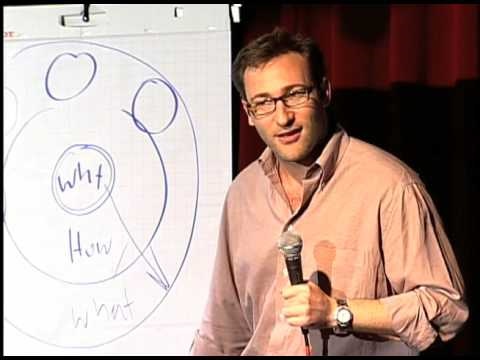
Simon Sinek, author of the book Start With Why.
It is not WHAT you do, but WHY you do it – Simon Sinek
Simon Sinek, author of the book, Start With Why gives a great presentation and ideas from his book.
Some thoughts include:
– It is not WHAT you do, but WHY you do it
– You want to do business with the people who believe what you believe
– You can’t just copy it
You can view it (about 18 minutes long) here.

Listen to a story at The Moth
The Moth features audio stories from various people, famous and not so famous. According to the website, “The Moth, was founded in New York in 1997 by poet and novelist George Dawes Green, who wanted to recreate in New York the feeling of sultry summer evenings on his native St. Simon’s Island, Georgia, where he and a small circle of friends would gather to spin spellbinding tales on his friend Wanda’s porch. After moving to New York, George missed the sense of connection he had felt sharing stories with his friends back home, and he decided to invite a few friends over to his New York apartment to tell and hear stories. Thus the first “Moth” evening took place in his living room. Word of these captivating story nights quickly spread, and The Moth moved to bigger venues in New York.”
Each speaker is given 15 minutes to share a story.
Some of my favorite stories include:
“Alternate Ithaca” where Tom Weiser describes his midlife crisis
Former NYPD Officer Steve Osborne on his adventures as a policeman on the beat
“Just the Facts” by Andy Borowitz as he reminisces about his time as a writer on the TV show, The Facts of Life
“Impeachment Day” by Joe Lockhart who served as Press Secretary for President Clinton during President Clintons’ impeachment proceedings
Click here if you have a great story to tell.

Just how far do some frequent fliers go to rack up those miles?
Find out by watching this twenty minute documentary here.
 The Mike Johnson Blog