
Too much information, running through my brain. Too much information, driving me insane.
The Police
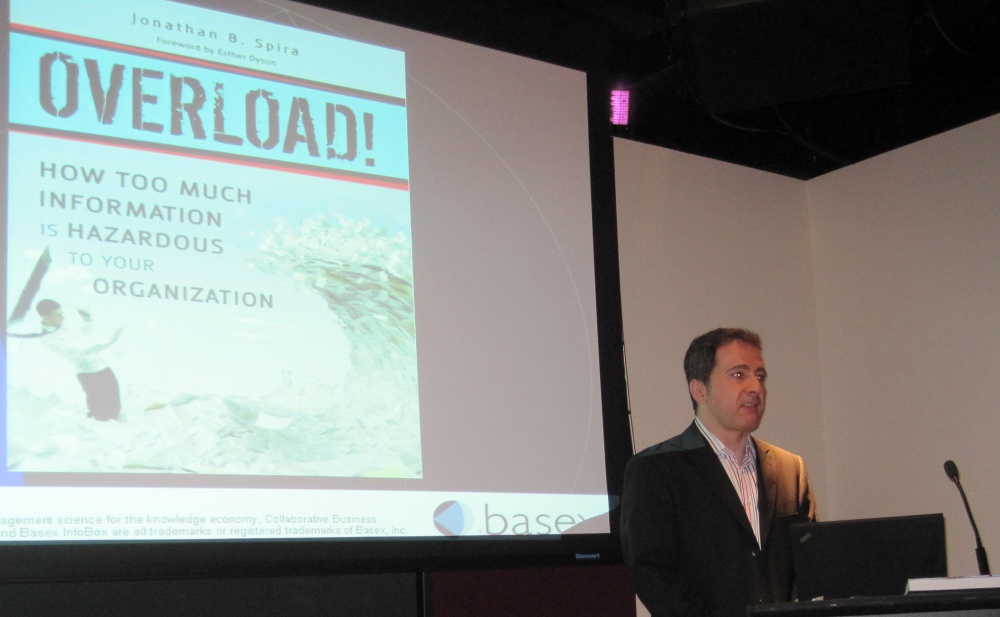
In his book, Overload! How Too Much Information Is Hazardous to Your Organization, Jonathan Spira describes how information, which used to be the cornerstone of productivity, is fast becoming it’s death knell. To make this blog post in the spirit of brevity, I will attempt to describe his presentation at the New York chapter of the Public Relations Society in under two hundred words.
We are fed hundreds of emails, receive numerous voicemails, texts, IMs, tweets, posts every day. The impact of this overload is a decline in productivity and no time left to get work done resulting in the U.S. economy to lose one trillion dollars in productivity each year.
What causes information overload?
– Increase in content creation
– Ubiquitous connectivity
– More ways for getting information
Information overload results in:
– Lower productivity levels
– Lower concentration levels
– Lower innovation levels
– Lower comprehension levels
You can become more productive by:
– Read your incoming email messages carefully
– Read your outbound email messages carefully
– Think carefully when addressing email
– Learn how to use search better such as more specific and better search results
You can follow Jonathan Spira on Twitter @jonathanspira.
You may also be interested in these posts:
Allison Fine and Beth Kanter The Networked Nonprofit: Connecting with Social Media to Drive Change
Gary Vaynerchuk and The Thank You Economy
Gary Vaynerchuk and Robert Scoble Discuss Business and Social Media
Ray Jordan on Johnson & Johnson’s Social Media Strategy
JetBlue’s Social Media Strategy with Jenny Dervin
David Meerman Scott, Author of Real-Time Marketing and PR
John Jantsch, author of Duct Tape Marketing and The Referral Engine

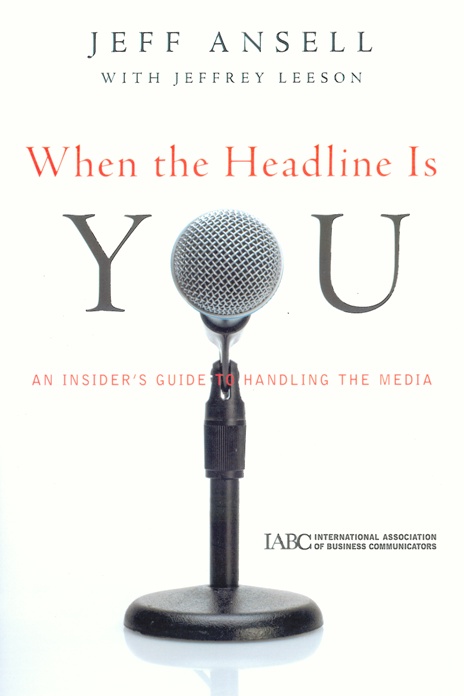
As you arrive to work one day it has been discovered that your chief financial officer or executive director hightailed it out of town with over $1 million of your company’s money. The local television and radio media has heard as well and is calling to get a statement. What do you do next? Jeff Ansell, author of When the Headline is You: An Insider’s Guide to Handling the Media provided tips on dealing with the media when a crisis arises in your company or organization.
Jeff states that the process of answering media questions is like learning a new language and if you answer in a manner of uncertainty, your company can be one sentence away from disaster. How is a company spokesperson supposed to know what to say and when to say it? One thing is certain: when you craft a statement for the media, make sure that all the sentences in the statement can stand alone if the press decides to select a short sound bite. You do not want to have messages that can be pulled out of context and be misconstrued by the viewer or reader.
Should your company/organization say “We are sorry?” The legal department at your company may not allow it since making that statement reveals guilt, fault and/or liability. What you really should address is how you would want your stakeholders to perceive your company/organization during the crisis. You have to provide the value compass which is a collection of words to use so your stakeholders sees your organization as accountable, trustworthy, concerned, empathetic, responsible and honest.
In response to using some other statements:
– “It was an accident” answer is honest, but the truth is not good enough and your organization/company will have to do more.
– “We are sorry and will work with state and environmental officials to work with cleanup” – more words match up and works better; Best to use a problem-solution formula. You create a one sentence construct and frame the problem and provide a solution in same statement.
Jeff also advises that when bad news strikes, you have to be just as upset as others. Using the statement, “We will investigate” lacks credibility since you are perceived as being the wolf protecting the hen house. Do you want to be quoted on a story like this? Jeff suggests that anytime you do not want to answer a question, simply explain why.
You may also be interested in these posts:
Allison Fine and Beth Kanter The Networked Nonprofit: Connecting with Social Media to Drive Change
Gary Vaynerchuk and The Thank You Economy
Gary Vaynerchuk and Robert Scoble Discuss Business and Social Media
Ray Jordan on Johnson & Johnson’s Social Media Strategy
JetBlue’s Social Media Strategy with Jenny Dervin
David Meerman Scott, Author of Real-Time Marketing and PR
John Jantsch, author of Duct Tape Marketing and The Referral Engine
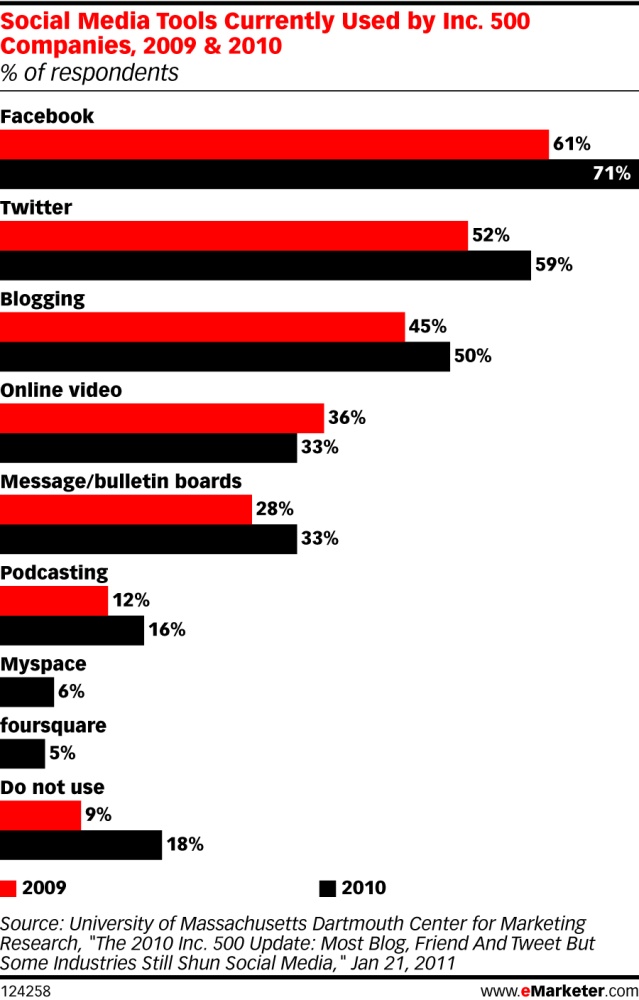
For the companies that make up the Inc 500 Facebook is the go to destination as a social media extension of their business. Facebook not only connects you to that old friend from high school or grammar school but also enables companies to reach out and market to a segment of customers. It will be interesting to see if businesses use podcasting more, but I think video software will be more integrated into Facebook creating more one stop functions for companies.
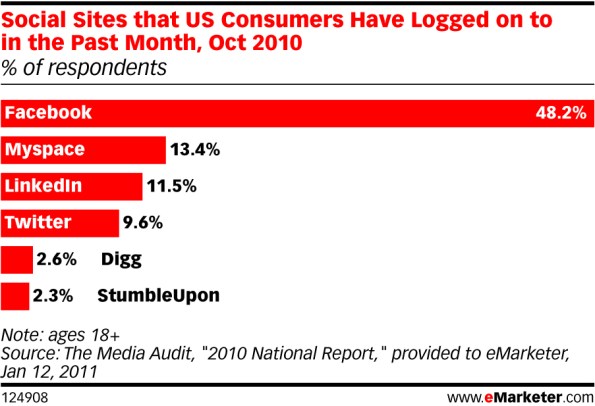
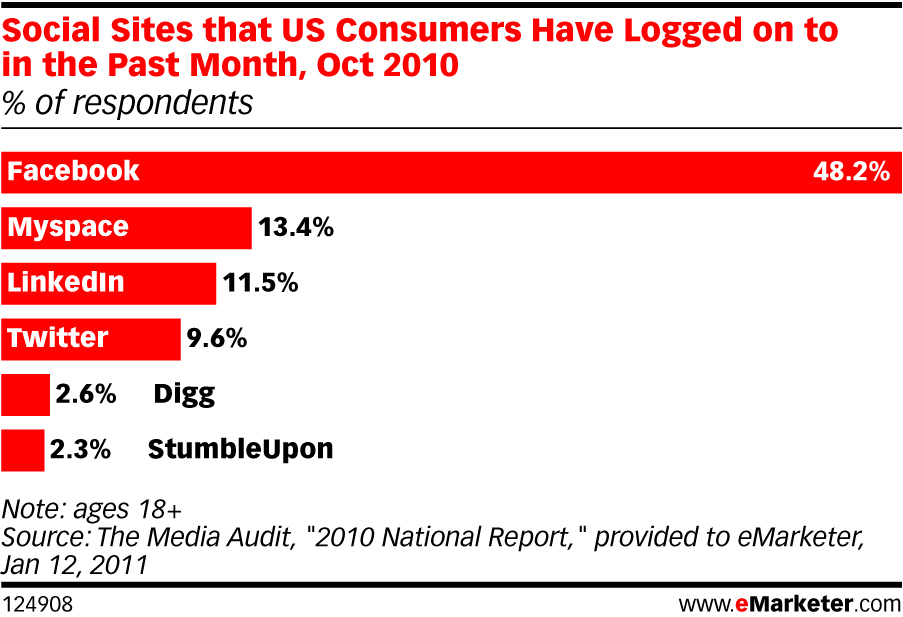
As per readers request I have another statistic via eMarketer that you may find useful. No surprise here that Facebook is in the first spot by a huge margin. I would think Twitter (as of April 2011) has taken the #2 spot as MySpace’s popularity has waned.
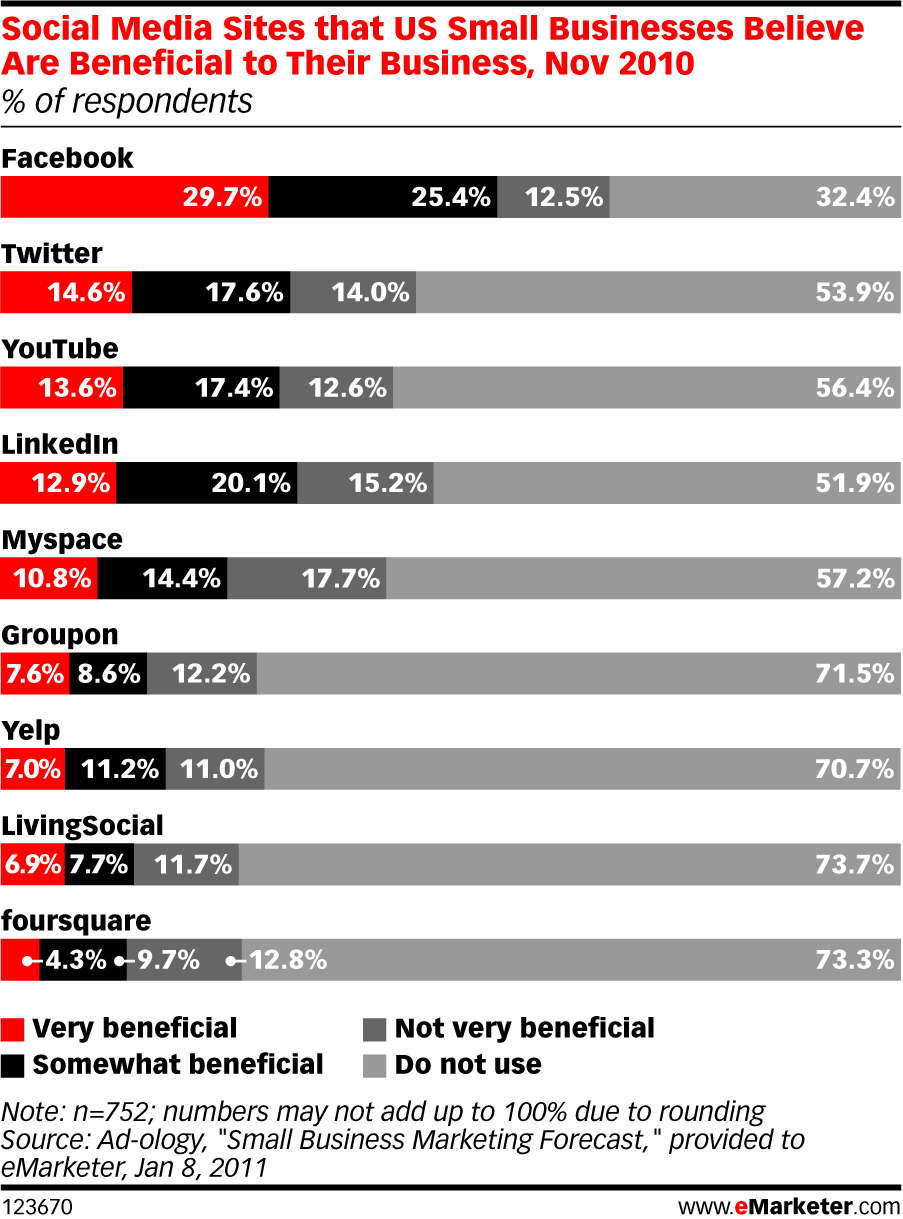
Facebook, Twitter, and YouTube take the #1, #2, and #3 spots respectively that small businesses have cited via eMarketer to be beneficial to their business. It is interesting to note that MySpace came in at #4 as I would think Groupon would be in the #4 spot.
 The Mike Johnson Blog