

I attended the Public Relations Society of America New York Chapter panel, “Regulatory Scrutiny of Social Media: The Impact on PR Communicators in 2010 and Beyond” in order to understand the new Federal Trade Commission guidelines regarding endorsements and testimonials for blogs and social networking sites.
Here is the copy about the event that was held in January, 2010:
“With continuing evidence of a growing demand for online news and information, PR communicators have to be better informed about new regulatory developments before jumping into the social media pool. Join our panel of experts in media law, health care communications and digital/social media as we explore what this heightened government scrutiny may mean for PR practitioners, marketers and media strategists.”
Speakers:
Marc Monseau, Director of Corporate Communication, Social Media, Johnson & Johnson
Michael Lasky provided an excellent summary of the emerging issues:
– FTC Guides for endorsements apply to blogging and other social media.
– An endorsement is defined as “[A]ny advertising message (including verbal statements, demonstrations, or depictions of the name) which message consumers are likely to believe reflects the opinions, beliefs, findings, or experience of a party other than the sponsoring advertiser.
– For endorsements and testimonials the FTC requires: Endorsements must be honest and not deceptive, The disclosure of material connections.
– “Results Not Typical” disclaimers no longer suffice.
– Marketers (and bloggers) can be liable for misleading or unsubstantiated claims.
FTC encourages companies to have their own social media policies:
– Social media policy should include: Permitted conduct, Encouraged conduct, and Prohibited conduct
– Educate employees not to violate others’ intellectual property rights (i.e., copyrights, trademarks)
– Prohibit disclosure of confidential information
– Ensure that discussions regarding competitors are not overly-negative.
– Prohibit employees from posting any objectionable content.
– Educate employees to disclose that their statements reflect their own opinions, not the company’s.
– Ensure that employees disclose their connection to the company when posting about its products or services.
Blogging Guidelines for posts by bloggers:
– Blogger with blog From Dates to Diapers reviewed a mattress and promoted a giveaway and the disclosure statement was: “This mattress from the Sealy Signature 11 Series was sent to us to review.”
10 Things PR Firms and their clients should be doing now:
1. Marketers should advise bloggers with whom they have a material connection (e.g., provide payment or free products (in certain instances), blog services, etc.) to disclose their relationship with the Marketer whenever making a positive review about the Marketer or its products or services.
2. Marketers should monitor their bloggers to ensure that they make the necessary disclosures and that their statements are not misleading or unsubstantiated.
3. If hiring a blog service, the Marketer should confirm that the service provides guidance and training to its bloggers to ensure that the necessary disclosures are made.
4. Employees of the Marketer or its PR firm should disclose their relationship to the Marketer if posting messages on online discussion boards.
5. Marketers should institute written policies and procedures concerning the rules by which their employees engage in social media.
6. “Street Team” members who receive any form of consideration for promoting a Marketer’s products should disclose their connection to the Marketer.
7. When celebrities are paid for promoting products in non-traditional media, such as talk shows, interviews and social media sites (e.g., Twitter, Facebook, etc.), they should disclose their relationship with Marketers.
8. Spokespeople should undergo enhanced media training to ensure they understand what disclosures must be made in non-traditional media and what representations they can make about Marketers’ products.
9. In determining the appropriate level of disclosure, consider the likely audience for the blog, social media site or other venue on which the communication is being made.
10. Seek advice from experienced legal counsel to see if you have any questions/concerns if you are not sure if things are violating the FTC policy.
At times the presentation got caught up in legalese which causes me to start to drift as I tend to get lost by various legal procedures but overall I found the information to be valuable for any organization starting to post and comment via Facebook, Twitter, or a company blog.
You may also be interested in these posts:
Allison Fine and Beth Kanter The Networked Nonprofit: Connecting with Social Media to Drive Change
Gary Vaynerchuk and The Thank You Economy
Gary Vaynerchuk and Robert Scoble Discuss Business and Social Media
Ray Jordan on Johnson & Johnson’s Social Media Strategy
JetBlue’s Social Media Strategy with Jenny Dervin
David Meerman Scott, Author of Real-Time Marketing and PR
John Jantsch, author of Duct Tape Marketing and The Referral Engine


- Ansley Roan of Beliefnet spoke to the January meeting of the Religion Communicators Council New York City Chapter.
Photo by Andrea Louie
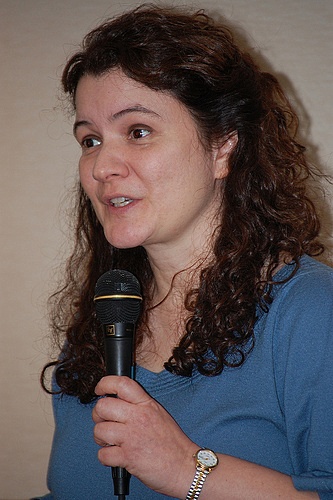
Ansley Roan, Senior Editor at BeliefNet gave a presentation to the Religion Communicators Council-New York City Chapter and provided a walk through on the new site redesign. Beliefnet is the the worlds largest community for spirituality and inspiration. According to the Beliefnet website:
“Our mission is to help people like you find, and walk, a spiritual path that will bring comfort, hope, clarity, strength, and happiness. Whether you’re exploring your own faith or other spiritual traditions, we provide you inspiring devotional tools, access to the best spiritual teachers and clergy in the world, thought-provoking commentary, and a supportive community. Beliefnet is the largest spiritual web site. We are independent and not affiliated with any spiritual organization or movement. Our only agenda is to help you meet your spiritual needs.”
Listen to the full audio program.
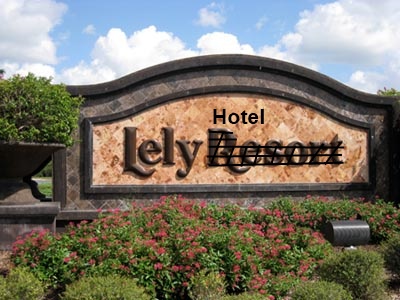
In the January 26, 2010 Wall Street Journal, the article, “Don’t Use the R-Word: Hotels Find Trick to Business Bookings,” hotels (or resorts) that used to have the word “resort” in their name, are now dropping the “resort” from their name to attract corporations to hold conferences at their hotels. After the 2008 financial meltdown, and with those large banks that received bailouts funded by the taxpayers, these same companies are attracting media scrutiny, and the last thing you want to be accused of is getting a spa treatment using taxpayer money.
From the article:
“The Ballantyne Resort in Charlotte, N.C., changed its name during the summer to the Ballantyne Hotel & Lodge after several corporate clients indicated it would have a better chance of landing their business if it weren’t called a resort. Same for the Westin Stonebriar near Dallas, formerly the Westin Stonebriar Hotel & Resort. Ditto the Renaissance Orlando at Sea World, no longer the Renaissance Orlando Resort at Sea World.“
“Other than the name-dropping, little else has changed. The bedsheets at the Ballantyne remain Egyptian cotton, and guests still can book an appointment at the spa. Guests at the Westin Stonebriar still can get a tee time for the property’s Tom Fazio-designed golf course. “It doesn’t change who we are,” Renaissance Orlando sales director Gary Dybul said. Resorts must also contend with public backlash against the conferences they host.“
One resort closed due to the lack of business:
“The resort stigma was stoked by widespread outcry late in 2008 about a $400,000 sales retreat that American International Group Inc. planned to host at the St. Regis Monarch Beach resort in Dana Point, Calif. Facing scorching criticism, AIG, the recipient of $180 billion in taxpayer assistance, canceled the event. The 400-room St. Regis couldn’t recover from the bad publicity and was foreclosed upon by one of its lenders, Citigroup Inc.“
As always, it is how you are perceived that is the key:
“Companies “are just being very conscious of the location selected, because everybody’s so paranoid about perception,” said Jennie Jacobson, president of event-planning company Unique Events Inc. in Agoura Hills, Calif. Allstate Insurance Co. early in 2009 canceled all its off-site meetings, including gatherings meant to reward its sales force. Not until last fall did Allstate resume the gatherings. “Our meetings were completely canceled by perception, not cost,” Allstate meeting manager Laurie Fitzgerald said at the Professional Convention Management Association’s conference in Dallas in January. “
This change may have actually done some good as business seems to be improving:
“Dale McDaniel, general manager of the 493-room Loews Lake Las Vegas, says a name change has improved his property’s bottom line. The change so far has helped the Loews Lake Las Vegas land five conferences totaling 1,000 room nights—four with pharmaceutical companies and one with an insurance company, Mr. McDaniel said. He declined to identify those companies. But two that held conferences at the property after its name change—Medco Health Solutions Inc. and Astellas Pharma U.S. Inc.—say their meetings there were all work and little play.”
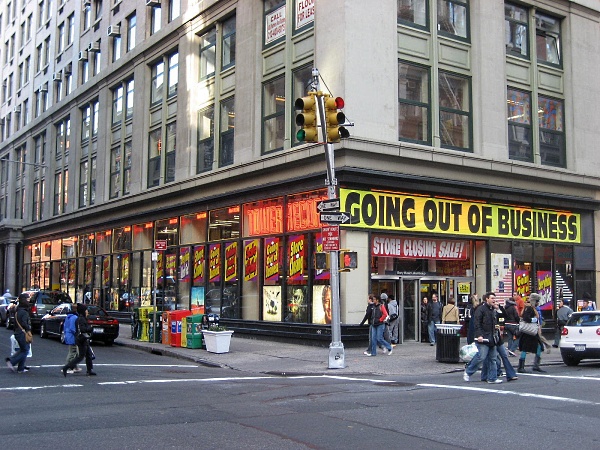
Tower Records New York before the end of an era.
In the January 15, 2010 Wall Street Journal, “Running on Empty – Artists explore abandoned spaces,” we learn that the retail space on Broadway and Fourth Street in New York that once housed Tower Records (and closed in 2006), will be occupied by a project, “Never Can Say Goodbye” from No Longer Empty which will be a mock shop of the former Tower Records store.
From the article:
“In its heyday, Tower Records in Manhattan’s East Village teemed with music-loving shoppers. But in 2006, with buyers rushing to online music stores and big box retailers, the store closed. Starting this weekend, the place will fill up again—this time with performances, panel discussions and conceptual art installations, some lamenting the demise of music stores. The project, called “Never Can Say Goodbye,” is from No Longer Empty, a New York nonprofit that places public art projects in vacant retail spaces. (The group’s first such exhibit was at an empty fishing-tackle store.)”
With a lot of empty retail spaces, it is great to see a new alternative use of the space:
“It’s the latest in a wave of art galleries and theaters popping up in empty retail spaces around the country amid the recession. At a partly-vacant mall in suburban St. Louis, a program called ArtSpace has brought in theaters, art galleries and dance studios to occupy what were once beauty salons and chain stores like Abercrombie & Fitch. In the Los Angeles area, Phantom Galleries LA has placed temporary art installations in vacant shops and storefront windows.”
Maybe a bit too realistic:
“The artists and curators behind the Tower Records project in New York say it’s partly meant as a look at what the art world can learn from the music world’s troubles. To passersby, the site will look a lot like a lively music store, with racks of records, a cash register and promotional posters hung overhead. (Window-sized “For Lease” signs remain, however.) Ted Riederer and 40 other artists have created the mock “shop,” which will include record albums that have their covers blacked out except for a few words. “My goal is … to have them in the store for 30 minutes until they realize it’s not a store,” he says. Opening night of the New York exhibition will include an appearance by a Vanilla Ice impersonator.”

Yeah, sorry my...
Continuing with the ‘Sorry’ theme there is an article in the January 12, 2010 New York Times, “For Bankers, Saying ‘Sorry’ Has Its Perils,” everyone is watching and waiting to see if the bankers and financiers on Wall Street will ever apologize for their role in the 2008 financial crisis.
Unless you have been under a rock since August 2008, you may have heard that the United States financial markets suffered a steep starting in September 2008. Since then various U.S. government officials have been trying to get to the bottom of the root causes this crisis. A lot of the blame goes to various Wall Street firms such as Goldman Sachs, Lehman Brothers, AIG, and Bear Sterns to name a few. For those firms that have survived this crisis, some of those CEOS are preparing to testify in the next few days at the Financial Crisis Inquiry Commission and their companies during that period.
What are we really waiting for? An apology, but you may as well keep on waiting as it never seems to arrive.
From the article:
“American culture does not put a premium on apology,” said Michael Useem, professor of management at the Wharton School at the University of Pennsylvania. “The level of anger in this public in general is extremely high against those who led Wall Street into the abyss, in part because they never stepped forward to apologize for the mess they made.”
In November Lloyd C. Blankfein may have uttered an apology, but will he do it at the hearings?
The art of the nuanced regret — admitting mistakes without accepting blame — will be on display Wednesday at a hearing of the new Financial Crisis Inquiry Commission in Washington, where Lloyd C. Blankfein of Goldman Sachs, Jamie Dimon of JPMorgan Chase, John J. Mack of Morgan Stanley and Brian T. Moynihan of Bank of America are to testify about their roles in the financial crisis. Mr. Blankfein, whose firm is on track to report blowout 2009 profits, uttered the word “apologize” in November although he is not expected to repeat it in his testimony Wednesday. “We participated in things that were clearly wrong and have reason to regret and apologize for,” he said, without elaborating on what “things” the firm did wrong.”
Maybe it is just the DNA of Wall Street. This is the place where the high rollers of finance perform and only the best and brightest compete. To show any sign of weakness and you will be tossed out of the ring quickly:
Sydney Finkelstein, a management professor at the Tuck School of Business at Dartmouth, said his research for a recent book showed that heads of Fortune 500 companies almost never apologize for poor performance. “Out of the 100 or so companies we looked at, only one acknowledged managerial culpability — Andy Grove at Intel for the company’s handling of the Pentium,” he said. “We specifically looked at many other companies,” he added, “and found none who admitted managerial error, let alone apologized for it.” Another reason it is so hard for chief executives to apologize is that they simply tend to have big egos that are not used to admitting mistakes, said Robert F. Bruner, dean of the Darden School of Business at the University of Virginia. “You don’t get to the top of a large and highly competitive organization by debasement and humility,” he said.”
Read the entire article from The New York Times, “For Bankers, Saying ‘Sorry’ Has Its Perils”
 The Mike Johnson Blog