
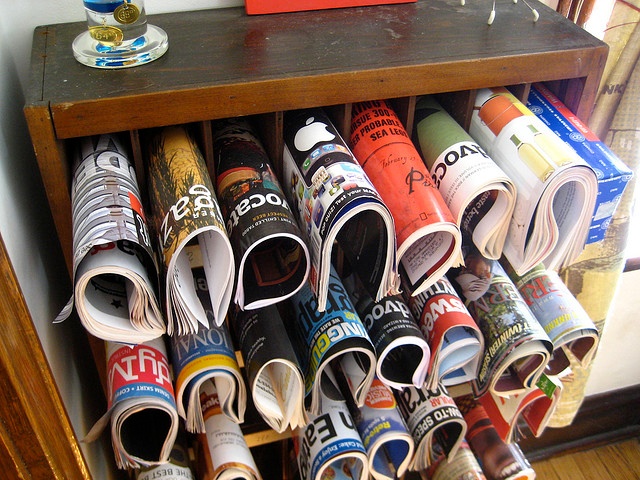
I attended the Public Relations Society of New York event, “Taking the Lead – How to Get Ahead, Get Your Products Noticed and Get in Long Lead Magazines” which was described as, “as magazine sources continue to dwindle, PR professionals are left with a shrinking field of options for their clients. However, clients still want their products and stories to be featured. But how do we best approach them? What makes for a great story or product feature? And how do you build relationships with editors?”
Panelists:
- Ellen Breslau, Executive Editor, Woman’s Day
- Sonal Dutt, Lifestyle Editor, Every Day With Rachel Ray
- Jonna Gallo Weppler, Articles Director, Family Circle
Ellen offered the following:
– Be familiar with our magazine sections
– Desk side good for the health department, find real women for us to cover a health story
– Offer me a reason why you want to see us in person, do you have an expert with a new health study?
– Must have the product in hand and available for them to be able to test and use it for themselves
– I will attend your press event if it is succinct; show me three main points of your product
– Woman’s Day website has 2.5 million unique visitors a month. We do a lot of product testing through the website.
– Woman’s Day has an active Facebook page http://www.facebook.com/womansdaymagazine
– We are working on iphone and mobile apps; we also do live chats with editors hosted by The Washington Post
Sonal (Twitter @sonal_dutt) shared with the audience:
– Every Day with Rachel Ray is open to trend pieces for smaller/focused pitches
– The editorial offices have a demo kitchen that enables chefs to cook and bake which the staff gets to sample the food
– She attended four press events today and prefers events held in the morning and evening, she will attend an event if it is succinct (one hour max), informative, and enough to get her out of the office
– All Every Day With Rachel Ray editors have blogs and tweet
– They are looking for ipad/iphone apps and take pitches through those applications as well
– For an item to be included in their holiday gift guide issue it has to be under $150 and offer value
Jonna stated that:
– Family Circle puts out fifteen issues a year with April, October, and November being double issues
– The Food department is active in doing desk-sides and if you do a desk-side with us, shorter is better
– The staff and writers want to try out a product in real life/everyday use, and they do not want to put a product in their September issue if that product comes out later in December
– Some space may be available at the last minute so you may be able to add products
– Jonna does stealth marketing for her friends that are in public relations
– She prefers to attend morning events but since there is so much work to be done back at the office she cannot stay very long
– Family Circle adapts their current issue content for online and posts articles from past issues that readers continually request to the web
– In determining what items to include in the holiday Gift Guide issue they have not decided for 2010 as yet but the item(s) has to be family oriented, affordably priced, and the item has to be submitted to them by the end of August
You may also be interested in these posts:
How to Get Your Guest or Book on Rachel Ray, Piers Morgan Tonight, CBS This Morning Saturday
Skills that Get the Guest for Your Television and Radio Show
How to Get Your Sports Story or Guest on ESPN, Boomer and Carton, and USA Today
How to Get Your Story/Event/Guest on Bloomberg News
How to Get Your Story or Event on New York News Shows
Get Your Product, Book, Movie On Television and Radio Shows
How to Reach and Foster Relationships with Mommy Bloggers


The UPS driver is always prepared.
According to the Wall Street Journal article, “UPS Thinks Outside the Box on Driver Training,” United Parcel Service offers their drivers a simulated program that enables the drivers to experience slips and slides without breaking any bones. The program known as Integrad takes six weeks to complete and includes learning through simulated programs. Instructors have drivers practice loading and unloading packages from trucks (also being timed).
Did you know that:
- UPS wants to reduce injuries their drivers incur from falls on ice, so a machine simulates walking on ice. In terms of efficiency drivers have their truck keys on their fingers to save time to get back to deliveries.
- UPS only allows 15.5 seconds for the driver to park his truck and retrieve one package from the cargo
The interesting part of the article (for me) was at the end where the drivers are also encouraged to become marketers and observe the other packages in their client offices such as FedEx.
Read the full Wall Street Journal Article here.

If I am late for my train, I don't think I will be sticking around to read this sign.
As I was walking past Penn Station/Madison Square Garden on the corner of 32nd street and Eighth Avenue this advertisement caught my attention. But it caught my attention for the wrong reason – too much text. Unless I am stuck at this corner for more than two minutes, I am not going to read it. Also, the text is too small and the message does not get delivered. Why would you be concerned about that you ask? Well, something tells me that the folks paying for this advertisement space are paying a lot of money and I am not sure they are using it as effectively to get their money’s worth.
Now this advertisement on the next block gets my attention and message across clearly:

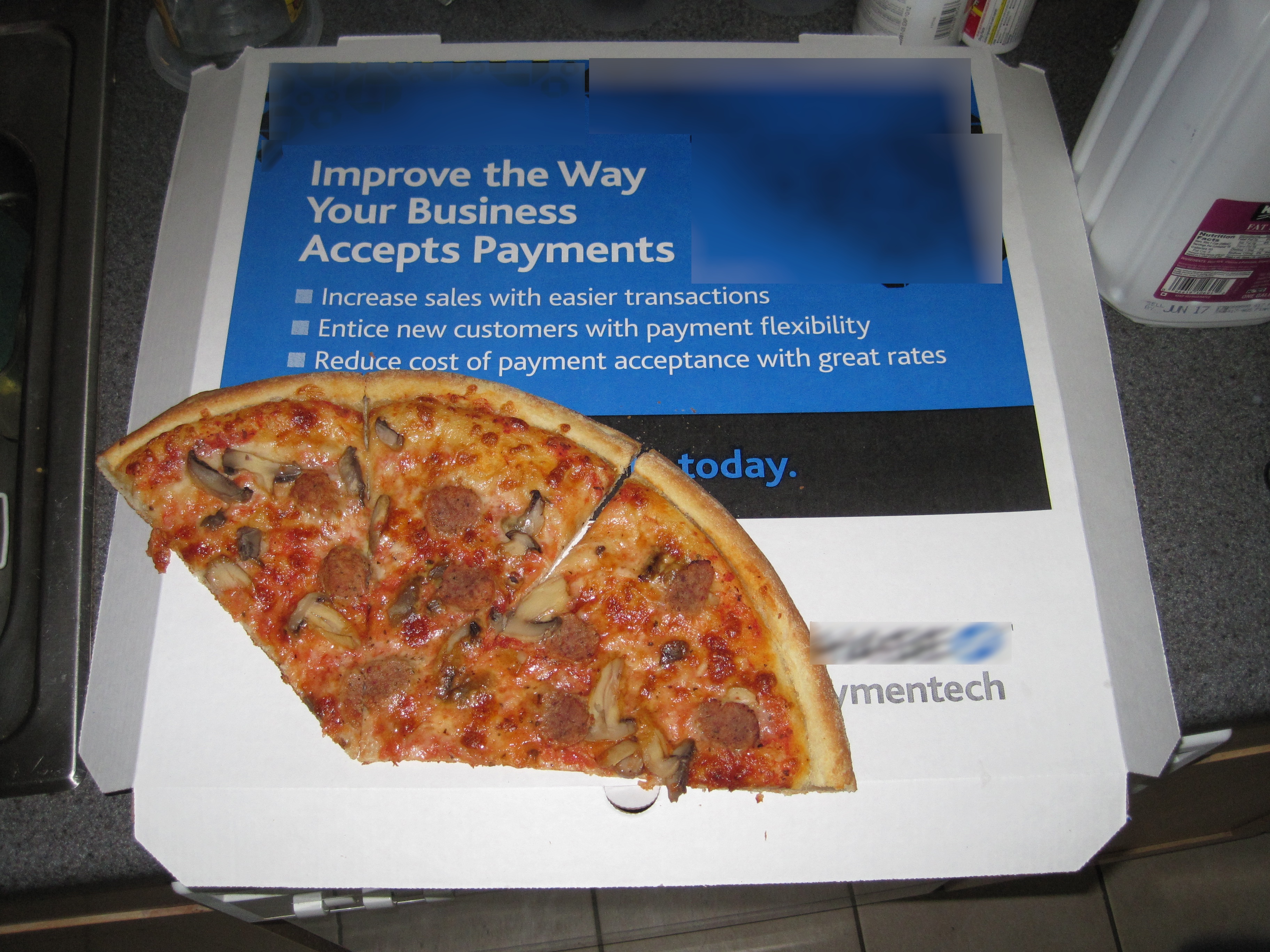
I miss the old pizza box tag line, "You've Tried All the Rest, Now Try the Best" since my local bank is advertising on the pizza box now.
As I was picking up dinner the other night from the local pizzeria I noticed that the pizza box looked different. A major bank is now advertising on pizza boxes. I don’t think you would have seen a bank advertising on a pizza box a few years ago, but now it has arrived. Great marketing opportunity? After all that work you should have included the QR Code!

Back in January I wrote a post here and here commenteing about companies failing to admit a mistake and apologize. According to the Fortune magazine article, “Saying sorry: Why so few companies do it” by Becky Quick, she points out some obvious examples:
“A respected medical journal chronicled the case of an 84-year-old patient whose Boston Scientific defibrillator accidentally sent an unnecessary shock to his heart. Instead of admitting there could be a problem with the device or even apologizing to the patient, who’d obviously been through a traumatic experience, Boston Scientific wrote a scathing letter questioning the doctor’s observations and criticizing the journal for printing the article. Welcome to accountability, corporate-style.”
But what is so wrong with a company simply defending itself of an accusation? Or is the rule book different for captains of industry:
“Most of us learn in kindergarten that when you hurt someone, you say you’re sorry. But captains of industry seem to have forgotten the rules of common decency. Instead of manning up and admitting their mistakes, far too often corporations and CEOs choose to deny, deflect, or deceive.”
Why is an apology so difficult? Do we just blame it on the lawyers?
“So why do corporate execs seem to have such a hard time making apologies? Maybe because admitting a mistake can be expensive when you head a major corporation. Plaintiffs’ lawyers would have a field day with an apology, and recalling a product is expensive. Levick, a crisis-communications firm that has helped companies recall more than 100 products, estimates that it costs twice as much to recall a product as it does to litigate claims related to faulty goods.”
Read the Fortune magazine article, “Saying sorry: Why so few companies do it” by Becky Quick.
 The Mike Johnson Blog