
I enjoy reading the various eMarketer reports and stats that are published as eMarketer provides great insight into which mobile and internet applications, websites, and the various ways consumers interact online with brands.
Some that have caught my attention include:
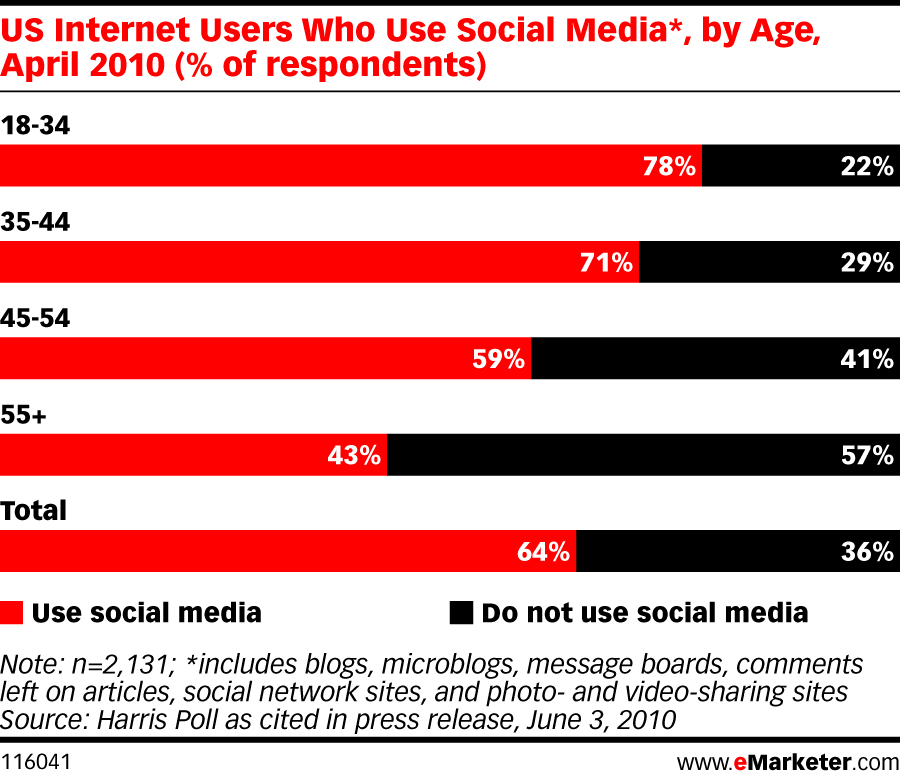
US Internet Users Who Use Social Media by Age
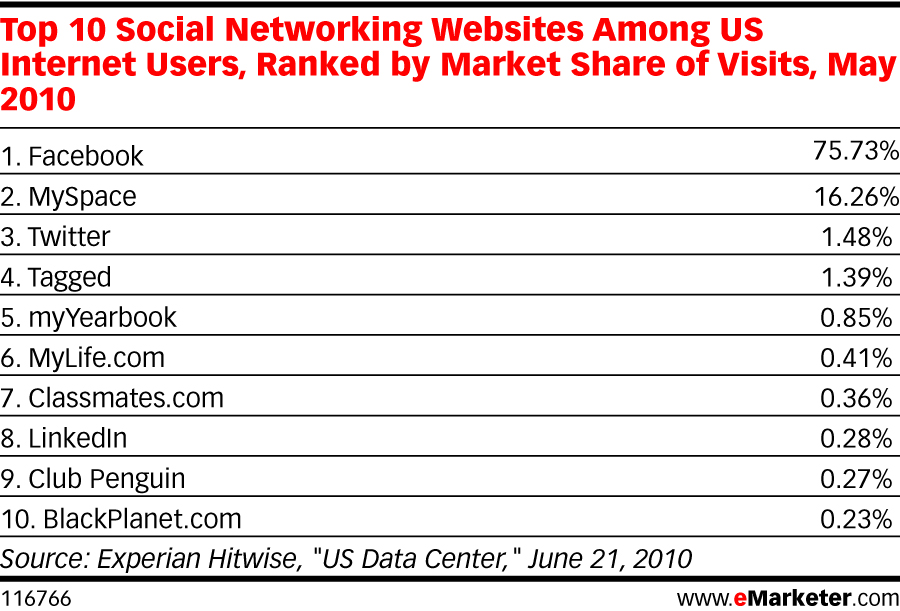
The Top 10 Social Networking Websites
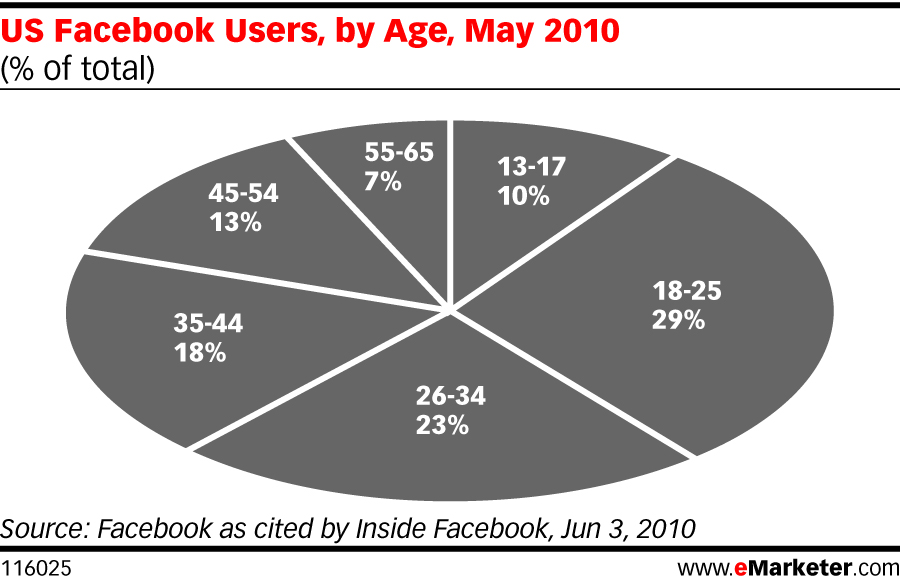
Facebook Users by Age

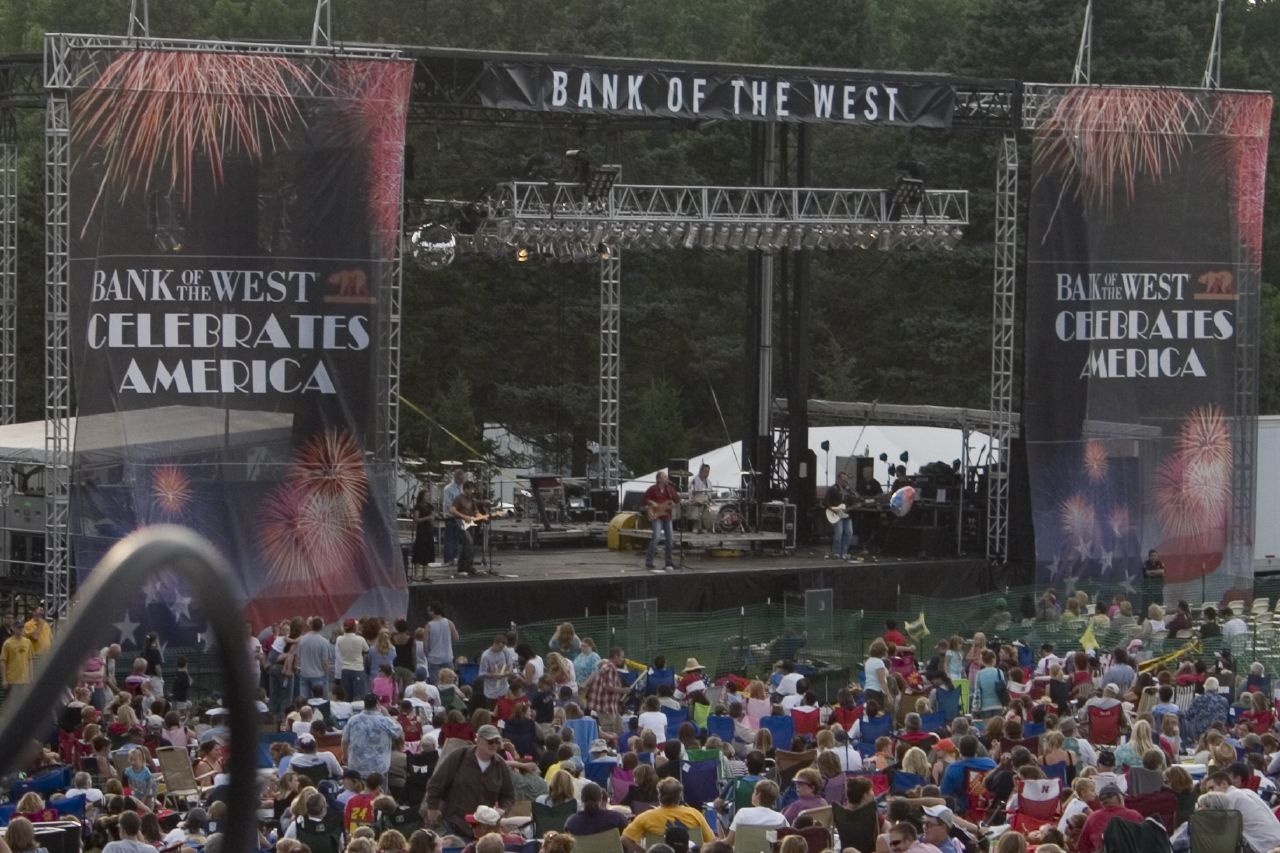
I came across a great interview from the June 5 Billboard Magazine with Marc Geiger, vice president at William Morris Endeavor. Geiger has been a concert promoter and talent agent among other things but is best known as one of the creators of the Lollapalooza music festival.
So when Marc speaks it may be worth listening to his ideas such as:
“The live music industry has work to do but doesn’t need a fundamental change, it just needs to improve. I go to a Billboard conference, some customer pays $200 to see all of us idiots speak, they get a goodie bag. You to Coachella, you pay $275, do you get a goodie bag? Wouldn’t you think that one of the labels there would go, “Hey, I’m going to see 80,000 music freaks. Shouldn’t I figure out a way to have them listen to three songs by my artist?”
You may also be interested in these posts:
Jermaine Dupri Talks About Global 14 at Social Media Week New York
Top Ten Ways to Get Your Band/Music the Most Exposure
The Changing Face of Music Discovery Social Media Week Panel
Top 5 Ways Your Song Can Gain The Most Exposure
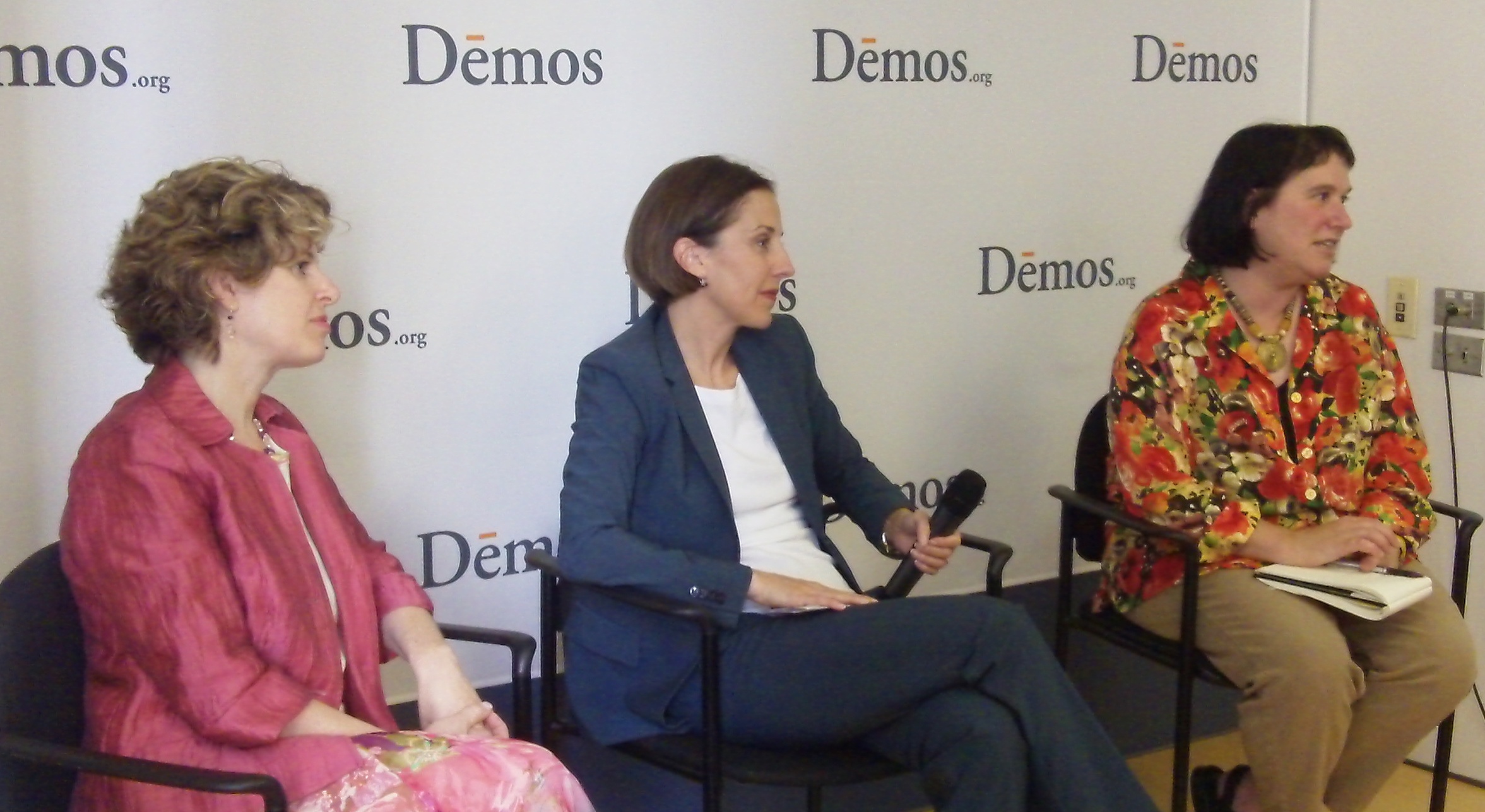
Left to right: Allison Fine, Stephanie Strom, and Beth Kanter discuss The Networked Nonprofit: Connecting with Social Media to Drive Change.
Allison Fine and Beth Kanter held a launch for their new book, The Networked Nonprofit: Connecting with Social Media to Drive Change, that included a thirty minute discussion moderated by Stephanie Strom, national correspondent for The New York Times. The book offers a set of guiding principles to help nonprofit leaders navigate the transition from top-down institutions to a networked approach, enabled by social media. The event held on June 29, drew a large group looking to incorporate social media strategies into their non-profit organizations.
I recorded the presentation and divided it into three videos:
If you are unable to watch the videos, here is a general outline of the discussion:
Introduction of Allison Fine and Beth Kanter, authors of The Networked Nonprofit: Connecting with Social Media to Drive Change.
At six minutes into the video, Stephanie Strom begins the panel discussion.
Allison begins with an overview of the book, how it came about, and mentions that New Haven, Connecticut has the largest number of non-profits per capita in the United States. Social networks can solve social problems. American Red Cross and Planned Parenthood are in the process of becoming networked non-profits.
Stephanie asks Beth: Can you give us some examples of the tried and true institutions that have become networked, and some that started out networked?
Beth started with an organization that began as a networked non-profit. At Packard Foundation she was going to blog about her experience. Chad Norman from Surfrider Foundation was giving a presentation at a lunch Beth attended. SurfRider Foundation is an organization whose members are passionate about saving oceans and beaches. Chad stated how SurfRider is able to track people and events for their organization. She searched for Surfrider on Facebook and noticed five hundred nineteen other SurfRider Facebook Fan pages that were broken down by region. Chad said that they can mobilize thirty thousand signatures in twenty-four hours quickly through Facebook.
Beth also spoke about American Red Cross hiring a person to go to war with bloggers since American Red Cross had been receiving criticism of their role in dealing with the Hurricane Katrina recovery. Wendy Harmon was hired and started writing weekly one page reports that she shared with other regional American Red Cross groups. Wendy would reach out to various bloggers that were writing about their experience donating blood and even the quality of cookies those donors received when they were done. Wendy spent fifteen minutes a day scanning bloggers comments. Eventually Wendy created a social media policy for American Red Cross. Following the Haiti earthquake American Red Cross disaster relief workers were using Twitter to communicate, and money was raised via text messaging.
Stephanie: To what extent of embracing social media in an organization depends on the leadership allowing what the American Red Cross did?
Allison answered that all the organizations mentioned in the book have a common DNA where they are transparent, and have an ease of use with social media. It requires organizational leadership to be comfortable with this new media. Common Cause is being driven by Bob Edgar as he is also on Twitter. What cannot happen is sending the intern down the hall to set up a Facebook page for the organization and checking back in after six months. National Wildlife Federation has seventy people working Twitter. Beth shared that Red Cross has a serious side, but when a disaster is not happening social media can be fun and help to engage fans as in the case of LOLCats performing CPR.
Stephanie: The concept of free agents is scary. As an employee of The New York Times I can understand why people are afraid of free agents. Please define free agents and how does Red Cross or an organization mitigate the risk?
Allison stated that free agents are facile with all the social media tools and they can connect with lots of people. They can raise money, create awareness and do it with no money. All they need to do is invest the time. We think free agents are an essential part of the ecosystem of social change. They are generally younger people so organizations should figure out how to welcome and consider them essential parts of the social change network.
Beth told a story about how Shawn Ahmed began The Uncultured Project after he dropped out of graduate school. He traveled to various places in the world to chronicle people with his Flip camera such as those suffering from malaria. Beth was at a conference and Ahmed said that “social media is not my problem since my YouTube channel has two million views and I also have thousands of Twitter followers.” Ahmed felt that the non-profits were the problem, and pointed to Wendy Harmon from American Red Cross and said he wanted to activate his network to help the earthquake survivors in Haiti, but he had been dismissed as “some guy on YouTube.” Ahmed then wrote a manifesto about his American Red Cross experience and how ARC is a fortress so Wendy engaged him through his blog and now he will be working with American Red Cross.
Stephanie: We build these networked nonprofits with large followers, but most nonprofits hope for this to translate into dollars. Two examples: Haagan Dazs and Tyson Foods. Tyson Food gave away food, but not big amounts. What is the expectation?
Allison: Facebook Causes was going to be a golden spigot, but that has not happened. We are re-imaging the direct mail paradigm. Donor bases are aging and either dying of natural causes or boredom. Millennials will not sign up for getting hit up to donate $25 a month. They want to participate in other ways. The Humane Society of United States spent eighteen months building friends on Facebook without asking for money. Last February they raised $650,000 since they had people who knew them and trusted them. The focus has to be on relationship building.
Beth ended with the following:
Four phases of “I” words:
Return on Insight – Learn how to do it better, best practices on social media, learn from mistakes.
Interaction/Engagement – Measure how well we are engaging with people and developing relationships.
Investment – People becoming volunteers, people signing up for lists, traffic to the website.
Impact – What is the offline on the ground impact?
You can follow Beth Kanter on Twitter @kanter.
You can follow Allison Fine on Twitter @afine.
You can follow Stephanie Strom on Twitter @ssstrom.
You may also be interested in these posts:
Gary Vaynerchuk and The Thank You Economy
Gary Vaynerchuk and Robert Scoble Discuss Business and Social Media
Ray Jordan on Johnson & Johnson’s Social Media Strategy
JetBlue’s Social Media Strategy with Jenny Dervin
David Meerman Scott, Author of Real-Time Marketing and PR
John Jantsch, author of Duct Tape Marketing and The Referral Engine
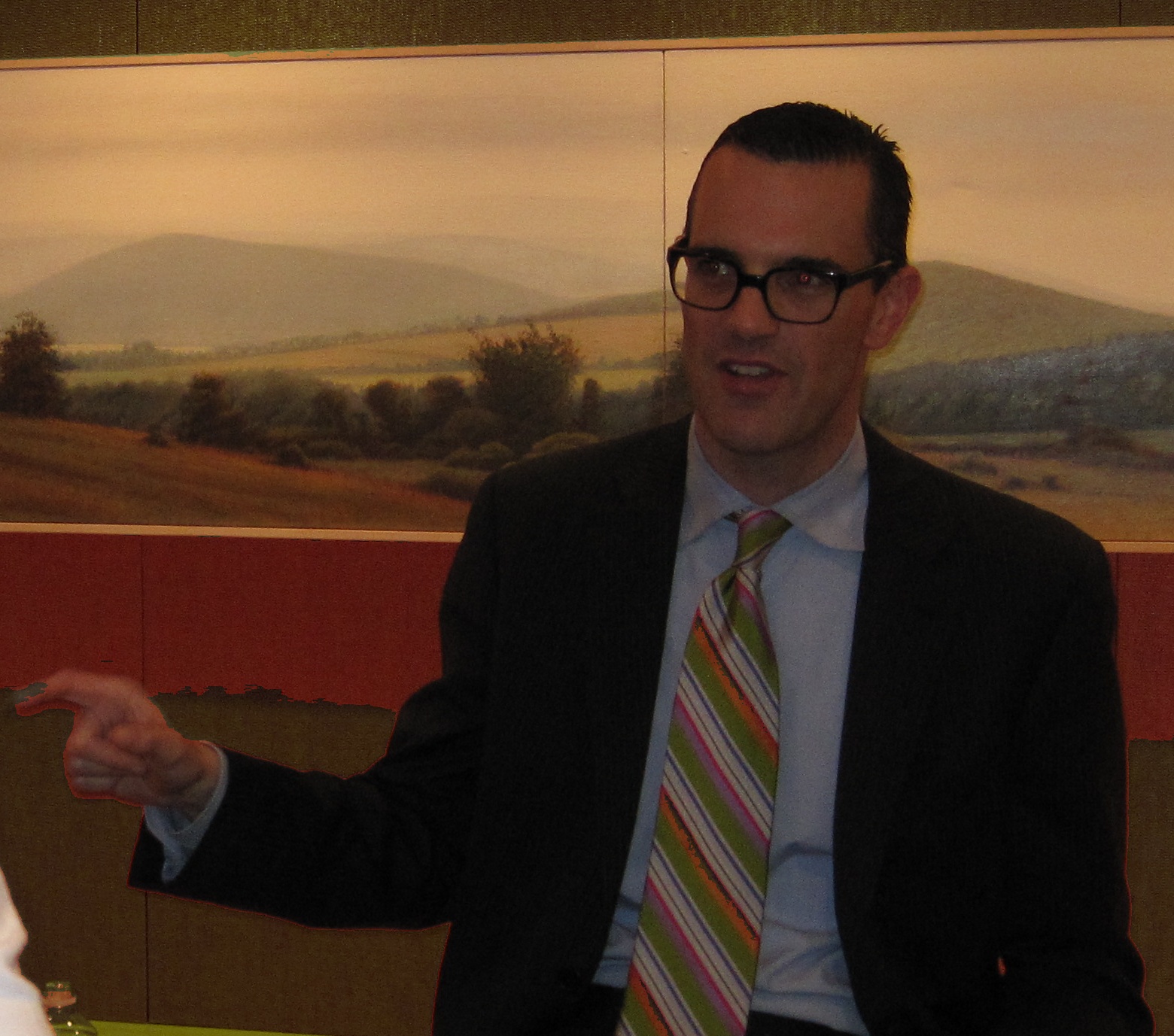
At the June International Association of Business Communicators New York Chapter meeting, Eric Chandler, Senior Consultant at CJP Communications illustrated how a B2B industry can implement social media by expanding their brand through Facebook, Twitter, and YouTube.
Chandler served as senior director of communications for Platform-A, the former division of AOL’s advertising functions, and was director of trade public relations for Bauer Publishing and is also an adjunct professor at New York University’s School of Continuing & Professional Studies.
Eric presented the following:
– If you are not doing social media personally you will not feel comfortable talking to upper management convincing them to use social media as well
– 35% of Fortune 500 firms have active Twitter accounts
– 20% of Fortune 100 firms use YouTube, Twitter, Facebook, and have a corporate blog as per emarketer
– Facebook overtook Google in March 2010 proving that sociability has surpassed searchability
– Marketing spending on social networking sites is predicted to rise 43% as per UMASS study
– Brian Morrissey from Adweek has a unique tweeting style and communicates well in the medium by building his brand on Twitter
– Use Tweetdeck to follow reporters
– Many companies now believe it is a risk NOT to be involved in social media (ROI = Risk of Ignoring)
– Social media is not: A new method of push marketing, a replacement for using discipline in your messaging strategy
– The benefits of using social media for your organization: Expands brand awareness, generates leads and builds the business, keeps customers and partners in the know on company news and information, encourages website traffic, and shares meaningful content
At this point in the presentation Eric took some questions from the audience. One member asked, “I am in a heavily regulated industry, what information can I share on our blog?” Chandler advised for this person to not tweet/speak about anything that would be heavily regulated, and to figure out what you and your organization can talk about in the social media realm. You have to ask yourself, how willing am I (and your department or organization) to push the envelope?
Eric wrapped up his presentation by offering the following:
Ideas and strategies your organization can implement tomorrow:
1. Use Twitter for brand building: Launch a Twitter presence to syndicate press releases and company news, create ongoing connections and conversations to promote business leads.
2. Use LinkedIn for recruiting and lead generation.
3. Use YouTube to reach a mass audience and share information with policymakers, the media, and the consumer.
4. New hire video series – Develop a library of online videos that highlight company culture, values and thought leadership.
5. Launch an online newsroom.
6. Optimize your press releases with SEO to improve release pickups, improve client traffic with key search terms, and improve search engine rankings in Google and Yahoo news.
Social media words of wisdom:
– It is not about the quantity of visitors, but the quality
– Connect with those that leave comments on your blogs, videos, posts, etc.
– Put yourself out there by reaching out and being open to others coming to your blog and posts
– For internal communications: Yammer, which is Twitter for companies, allows users to exchange short messages between various company groups and acts as a corporate social network, discussion board and knowledge base all in one interface
– Two companies Eric mentioned making use of the social media space: American Family Insurance and GEreports.com
– American Family Insurance can be found on Facebook, Twitter, YouTube, and Wikipedia
– GEreports.com is a news site run by General Electric that was created when GE was getting bashed by the news media and traditional public relations was not working to improve General Electric’s image so GE took control and created it’s own news channel on YouTube and Twitter
You may also be interested in these posts:
Allison Fine and Beth Kanter The Networked Nonprofit: Connecting with Social Media to Drive Change
Gary Vaynerchuk and The Thank You Economy
Gary Vaynerchuk and Robert Scoble Discuss Business and Social Media
Ray Jordan on Johnson & Johnson’s Social Media Strategy
JetBlue’s Social Media Strategy with Jenny Dervin
David Meerman Scott, Author of Real-Time Marketing and PR
John Jantsch, author of Duct Tape Marketing and The Referral Engine
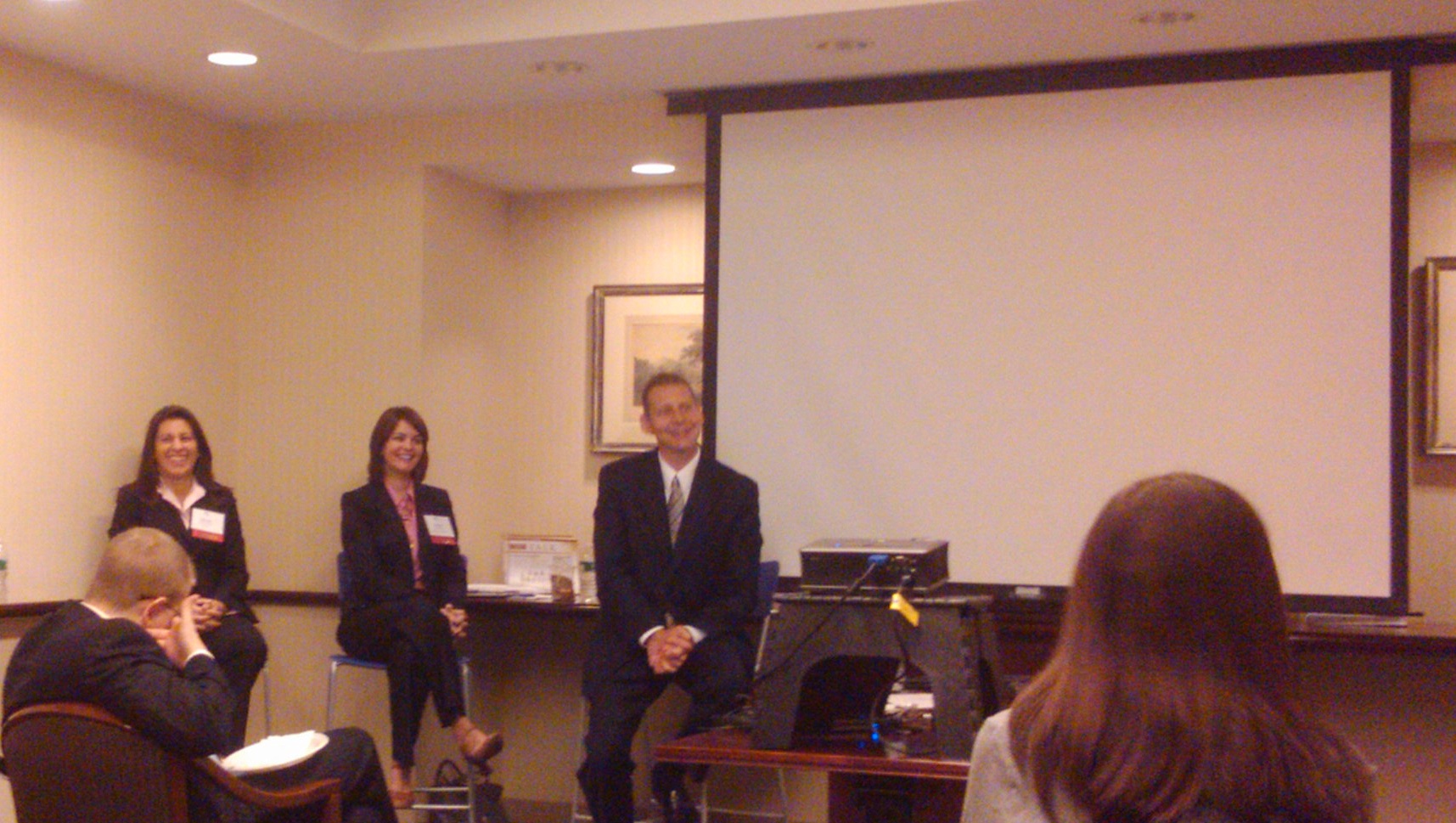 Panelists for the PRSANY May 6 panel, “Clarifying the Conversation: How to Develop Your Social Media Policy.” (left to right) Alayna Francis of Swiss Re, Taylor Morris from American Heart Association, Steve Halsey from Gibbs & Soell Public Relations.
With the growth of Facebook and Twitter gaining greater use in the corporate sector, many companies must now incorporate their own social media policy. But where do you begin? The Public Relations Society of America – New York Chapter held a panel on May 6, “Clarifying the Conversation: How to Develop Your Social Media Policy” provided information and tips on providing a social media policy for employees.
Speakers included:
Alayna Francis, VP, Swiss Re. Alayna advises on the global reinsurer’s internal communications framework, which has now been expanded to cover digital and social media.
Taylor Morris, Regional Director, Digital Communications & New Media, American Heart Association. Taylor develops the non-profit organization’s regional marketing and communications strategy utilizing digital and social media.
Steve Halsey, VP-Digital Media of Gibbs & Soell Public Relations (moderator). Steve shapes social media policies within PR strategies, including those for firms in regulated industries such as law and chemical manufacturing.
Steve provided the following points:
– Gibbs Soell established their social media policy in 2008
– Less than 30% of companies have a social media policy
– Setting policy is similar to traditional office/work policy such as: don’t use work computers for personal stuff, don’t send jokes or go shopping online, don’t clog up bandwidth by downloading videos and music
– Don’t write your social media plan in a vacuum: Get input from your Legal, Marketing, Communications, Human Resources, Executives
– Implementation Tips: Take time to explain the “why,” train employees on the proper use of social media; promote and celebrate best practices and success stories
Alayna provided the following points:
– In 2006 she was using social media and wanted to incorporate a blog policy into social media policy
– 65% have active Twitter accounts, 54% have Facebook fan pages, 50% have YouTube channel as per a Burson Marsteller Social media study of Fortune Global 100 companies
– Who gets involved in constructing the policy? Communications, Legal, Human Resources, Senior Executives, and the IT Department
– Even though Alayna is shaping the current social media policy she cannot access YouTube or Twitter at her own company
– Educate the non-believers in your organization
Taylor provided the following points:
– The National office of American Heart Association provided her with a sixty page binder social media policy which she then made into a one sheet guideline for her office
– For those employees thinking of creating something in their interest/specialty, they should answer the following questions before they start a blog or Facebook page:
– What is your goal and who is your audience?
– Do you want to raise money? Inform? Add names to database? Get new board members?
– Which person will be taking ownership and providing content? Who takes the lead? Are you adding to the conversation? Is the Communications department involved?
– How do you measure success? Will it be by the number of fans, online engagement (comments, etc.)?
– To address the fear of “What if?” (situations such as: what if a former employee that was fired now starts adding negative comments to the company blog), you need to react quickly and accordingly, decide if something requires a response
– In a perfect world your staff is reading and understanding social media guidelines, has a strategy, and clear goals
– American Heart Association is doing more with Flip video and concentrating on survivor stories (keeping the video no more than three minutes in length), covering buzz events, and telling a story
– Let members of your staff try new things and have a six month check-up/review, and if nothing is really happening you may have to change strategy
Visit American Heart Association on:
 The Mike Johnson Blog