
It has been a while but I got around to looking at one of my favorite sources for stats, eMarketer and thought you may be interested in the following:
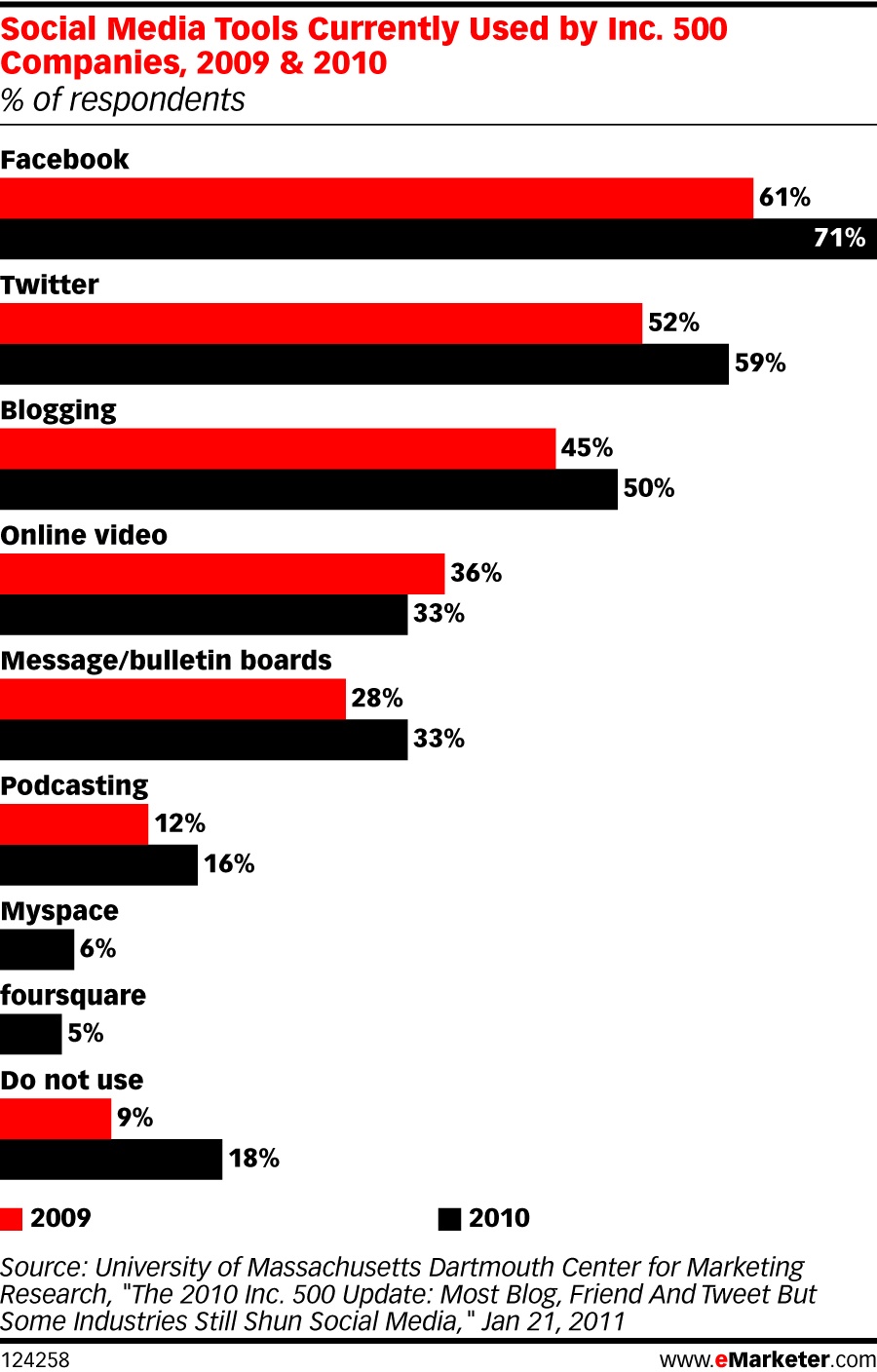
So Facebook is the clear winner here with Twitter in second, Blogging third, and it is interesting to see online video gaining traction.
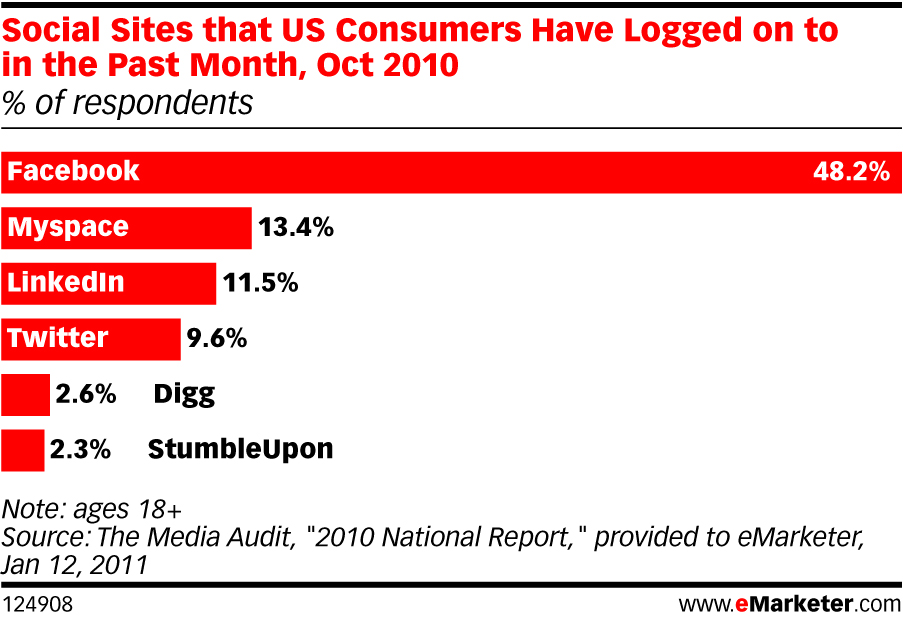
I thought Myspace was on the way out? LinkedIn is in the third spot, so does that mean the economy is improving and employees are gearing up to jump to other companies?
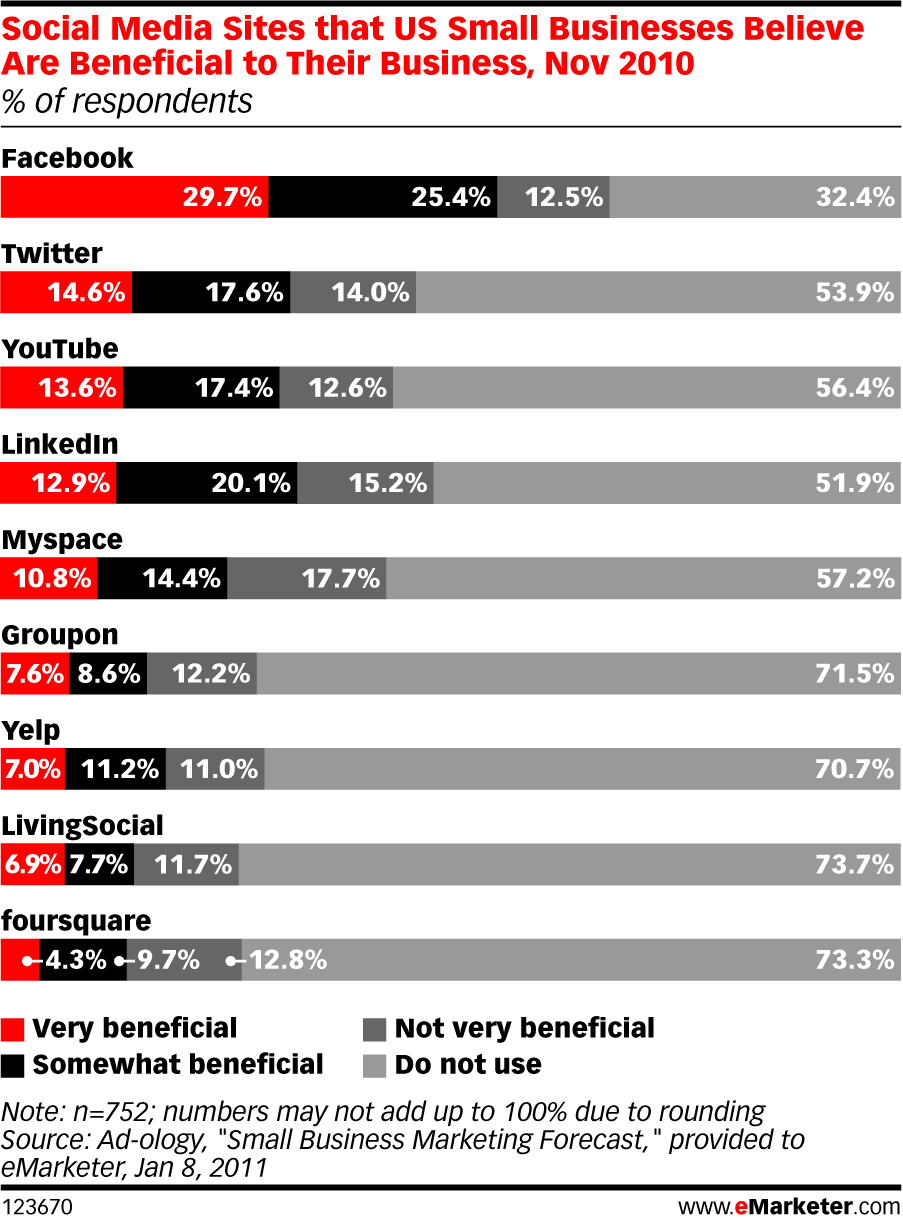
Again, Myspace is right behind LinkedIn so maybe all the talk of the demise of Myspace is too soon? Interesting to see Yelp coming in behind Groupon as well.
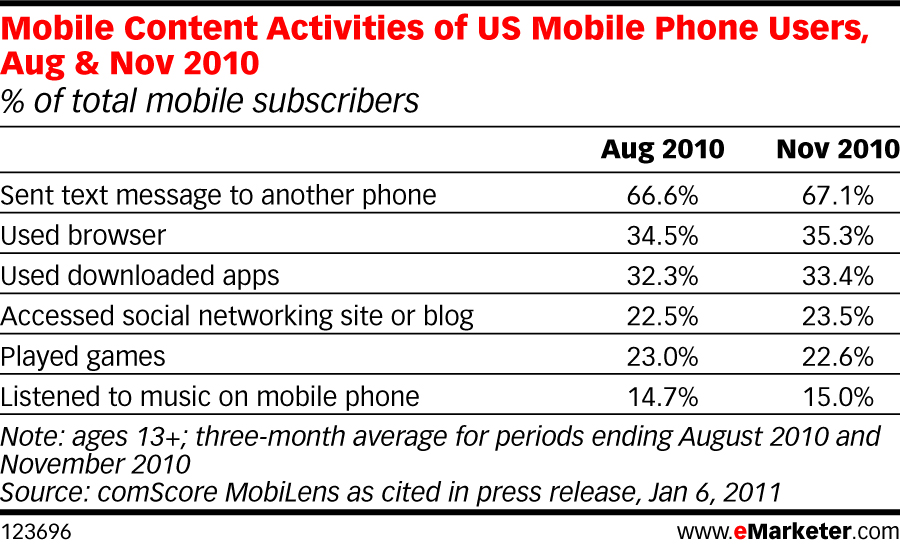
Text messaging is still number one as it was back in 1999. It will be interesting to see these statistics one year from now with more smartphones being used by music consumers and companies such as SirusXM now offering mobile apps will enable music to become a larger share.


JetBlue Director of Communications Jenny Dervin
When I think of crisis communications various industries come to mind: mining, pharmaceuticals, and airlines. So what do you do when your employee curses out your customers, grabs a beer and then exits a plane via the emergency slide? The New York chapter of the International Association Business Communicators held a panel, Social Media: It’s Critical Role in Crisis Communications with Jenny Dervin Director of Corporate Communications, JetBlue Airways. Jenny spoke about how her communications department responds to various JetBlue issues using not only social media but other methods as well.
It All Began With a Bad Snowstorm in 2007
On February 14, 2007 a major snowstorm hit the northeast which caused other airlines to cancel flights. JetBlue wanted to get their customers to their destinations so JetBlue’s planes were cueing up for de-icing, but as the weather grew worse JetBlue’s planes were stuck on the runway and could not return to the gate. These delays had passengers stuck on planes for many hours unable to exit even though they were so close to the gate. Many passengers were furious after this incident and in response to the crisis JetBlue founder David Neeleman created a videotape message for crewmembers apologizing to them as well as apologizing to customers and the message was placed on YouTube a few days later.
What did they learn from this first crisis?
– Customers want an explanation of the problem/delay/situation.
– Customers can sense authenticity.
– Interaction and transparency build engagement.
And the big one:
– You build goodwill through daily engagement and cash it in when you need it.
What Do You Do When Your Employee Slides Out Of Your Plane?
Jenny also spent some time explaining how JetBlue dealt with the Steven Slater incident. As a JetBlue flight landed at JFK and the plane was almost at the gate flight attendant Steven Slater became upset when a passenger started to retrieve his luggage from an overhead compartment before it had been announced that passengers were clear to stand up and begin exiting. Mr. Slater claimed that he was struck in the head with luggage and after failing to receive an apology from the passenger Slater got on the public address system, cursed out the passenger and exited the plane by activating the inflatable evacuation slide. Steven Slater went home and started emailing others telling them what happened. At this point JetBlue purposely did not comment as they did not have all the correct information and facts at the time. JetBlue then contacted all the customers from that flight to get their side of the story, and put out a blog post stating that the individual has a right to privacy; this helped separate JetBlue from the story.
The JetBlue Social Media Toolbox
JetBlue uses Seesmic to monitor all mentions on Twitter and Facebook. There is a monitoring team in Salt Lake City that takes information if a passenger experiences a flight delay or another issue and lets JetBlue managers know about it so when that when the passenger arrives at their destination the issue can be resolved. The point is to get the information to flow to the right people at the right time.
Guidelines on deciding what to Tweet include:
– Has to be relevant: bad weather or severe delays.
– Has to be timely.
– Has to be interesting to the community of people that engage in the JetBlue brand.
– Has to inform and engage.
You can follow Jenny Dervin on Twitter @SkyWriter012
You may also be interested in these posts:
Johnson & Johnson’s Social Media Strategy
How Pfizer, Tiffany and American Express Engage Their Employees
Inside Gatorade’s Social Media Monitoring Hub
JetBlue’s Social Media Strategy
How to Make Effective Videos That Connect With Your Audience
Hashtag Killer Psych USA Network Social Media Strategy
How CNBC, Pepsi, and American Express Harness Mobile Marketing and Commerce
Gary Vaynerchuck Book Discussion Jab Jab Jab Right Hook
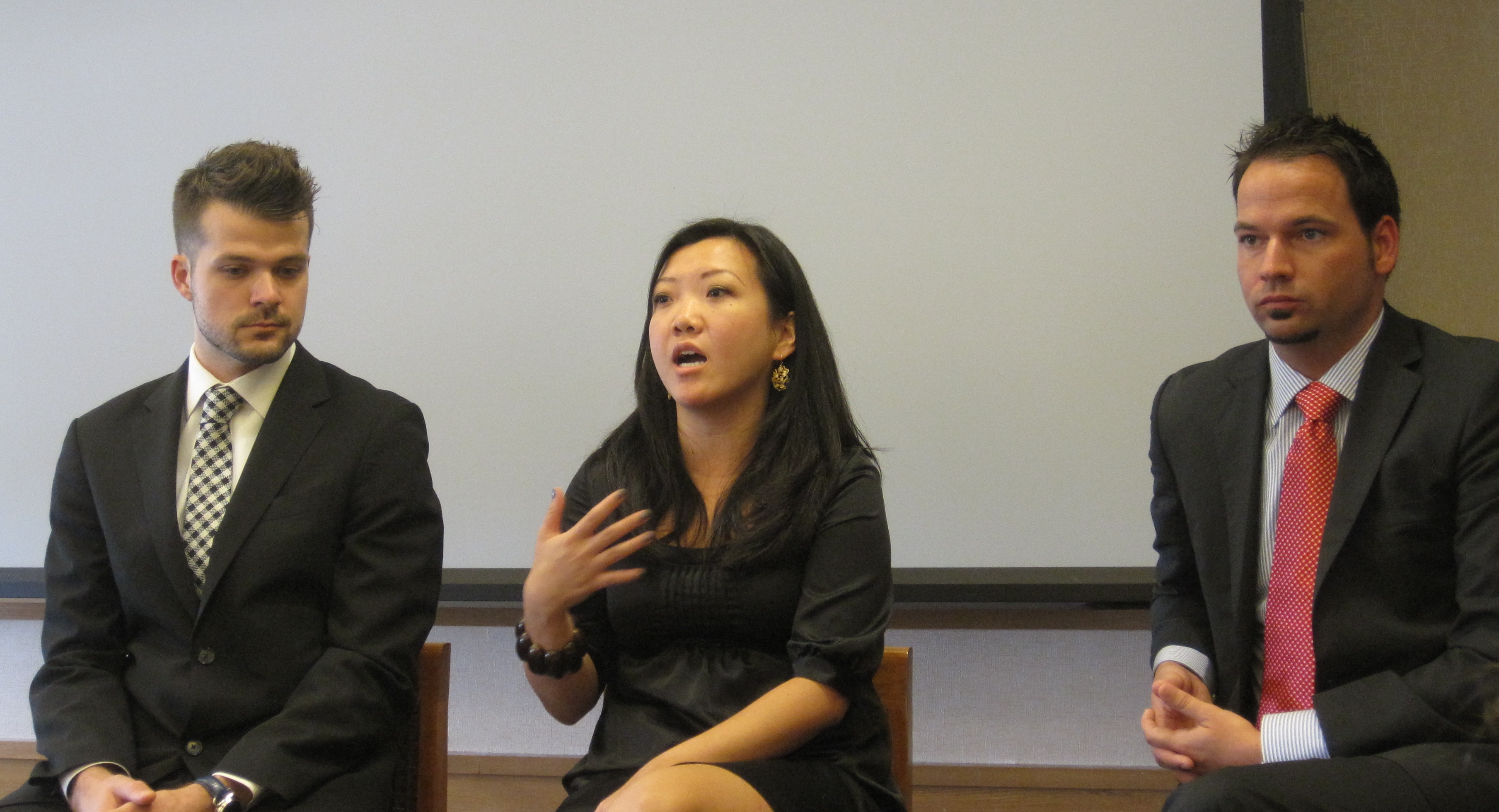
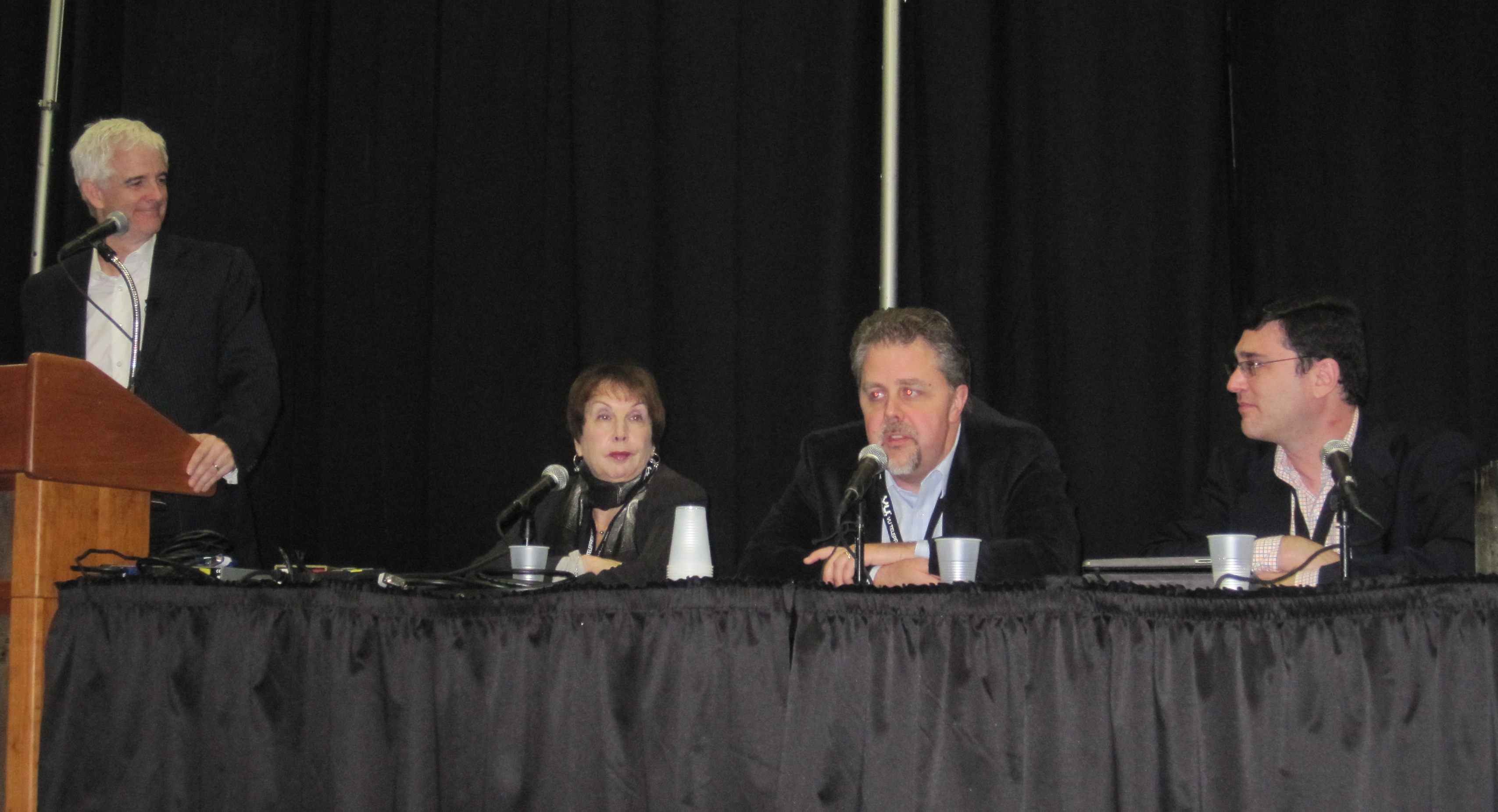
I would recommend you invest nine minutes of your time by viewing the video below from the NYXPO that features Howard Greenstein of Harbrooke Group and John C. Havens of Porter Novelli providing tips on where to start if you want to begin a blog for yourself or your organization, and the key websites that will enable you on the path.
You can follow Howard Greenstein on Twitter @howardgr.
You can follow John C. Havens on Twitter @johnchavens.
You may also be interested in these posts:
Allison Fine and Beth Kanter The Networked Nonprofit: Connecting with Social Media to Drive Change
Gary Vaynerchuk and The Thank You Economy
Gary Vaynerchuk and Robert Scoble Discuss Business and Social Media
Ray Jordan on Johnson & Johnson’s Social Media Strategy
JetBlue’s Social Media Strategy with Jenny Dervin
David Meerman Scott, Author of Real-Time Marketing and PR
John Jantsch, author of Duct Tape Marketing and The Referral Engine

David Meerman Scott, Author of Real-Time Marketing & PR
David Meerman Scott and The Public Interest Registry hosted a discussion about effective online marketing where David provided case studies and superb advice for marketing executives to explore real time marketing events and news from his new book, Real-Time Marketing and PR.
The Chilean Miners Love Oakley Sunglasses
The Chilean miners that emerged from their mine wore Oakley sunglasses which provided Oakley with over $41 million of advertising exposure. But what could have Oakley done to further their campaign? According to David he would have started a website with a .org as the url providing information and the reasons behind the Chilean miners needing to wear the sunglasses as they emerged from the mine. It used to be market share that made a company or organization competitive, but now all you need is speed and agility to give you that advantage. But most organizations forget about right now, so marketers need to ask, “What can we do today?”
David predicts that there will be a new trend of instant websites that can be created quickly as it relates to the current news for companies and organizations to either react quickly to a crisis, or provide more information to consumers and customers.
OK, But How Can I Get My Company to Respond in Real Time?
So how would you as a marketer for your company or organization go about marketing in real-time?
David has four suggestions :
1. Appoint chief real time officer; Guess what? You are it until one is appointed.
2. Develop real-time guidelines — Allow your employees to communicate in real time. The old way had you going through layers in the organization that included the lawyers, the CEO, the VP’s, but that does not work now. IBM’s corporate social computing guide provides you with a start.
3. Implement real-time systems to monitor what is being said about you. Have two systems in place such as Google Alerts and TweetDeck. Public companies are investing in their monitoring services such as Pepsico’s Gatorade Mission Control.
4. Develop a real time mindset — When something happens, be it news or a crisis, the time for your company to act is now, not a day, week or month later.
How do I get buy-in from my boss and my own company? Speed is the competitive advantage. When something happens, (it could be a crisis or news involving your competitor) these events will most likely occur around holidays, weekends, etc. when key executives are away or unreachable. If you have a plan addressing the steps and procedures to implement you will have the confidence from your boss to carry it out.
David is also the author of Marketing Lessons from The Grateful Dead and The New Rules of Marketing & PR.
You can follow David on Twitter @dmscott.
You may also be interested in these posts:
Allison Fine and Beth Kanter The Networked Nonprofit: Connecting with Social Media to Drive Change
Gary Vaynerchuk and The Thank You Economy
Gary Vaynerchuk and Robert Scoble Discuss Business and Social Media
Ray Jordan on Johnson & Johnson’s Social Media Strategy
JetBlue’s Social Media Strategy with Jenny Dervin
John Jantsch, author of Duct Tape Marketing and The Referral Engine
 The Mike Johnson Blog